The Land That Keeps Its Rhino: Lewa, and the Conservancy You Can Stay Inside
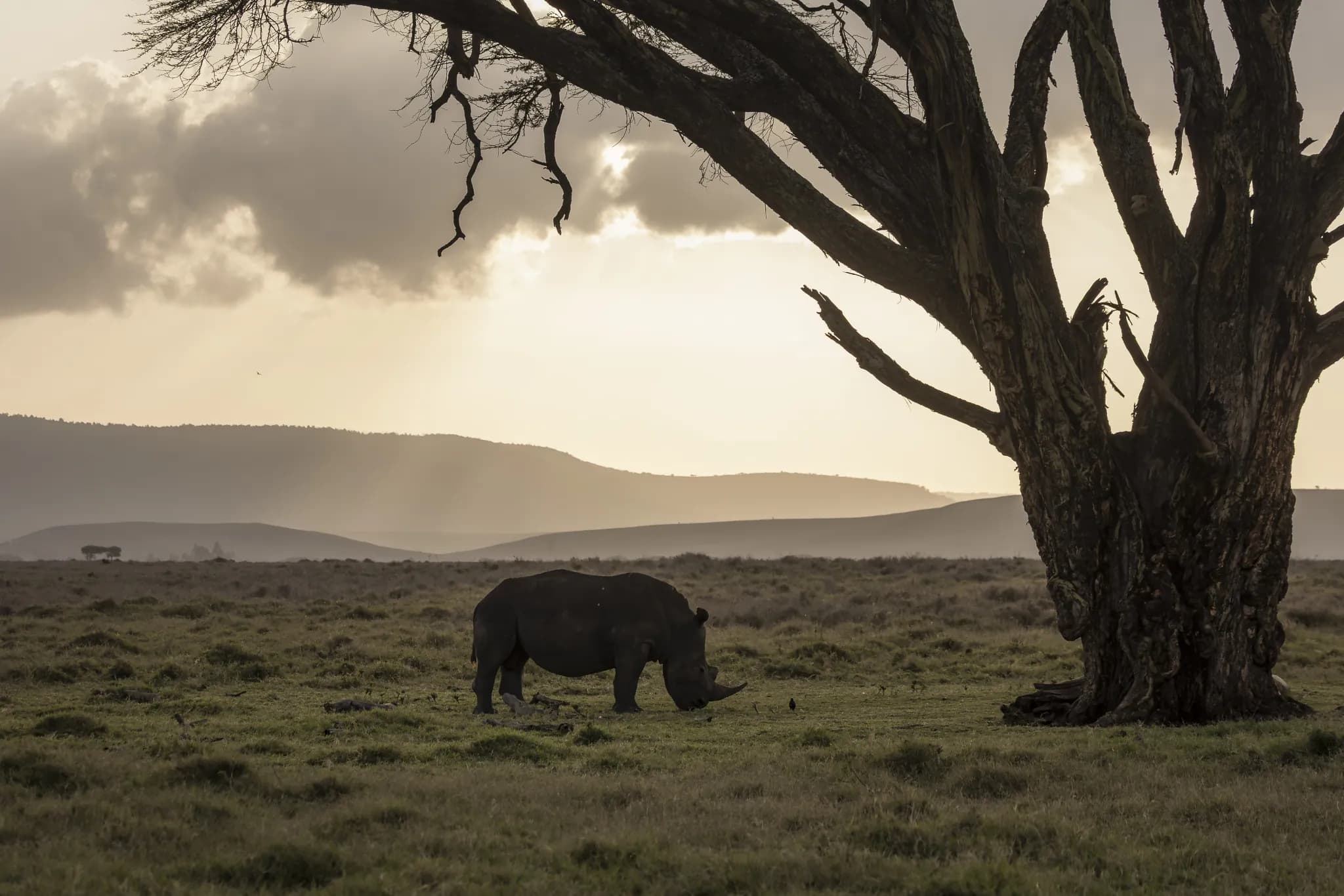
There is a particular kind of quiet that settles over the high plains of northern Kenya in the last hour of light, when the heat lifts off the grass and the Nyambeni hills go to shadow in the east. It is the hour the rhino move. They emerge from the cover in ones and twos — prehistoric, unhurried, entirely at home — and graze out across ground that, a generation ago, was a cattle ranch losing its wildlife to the rifle.
That it is no longer losing them is the achievement of the Lewa Wildlife Conservancy, a UNESCO World Heritage Site that has become, without much fuss, one of the most important pieces of land in Africa. Lewa holds more than ten per cent of Kenya's black rhino and roughly fifteen per cent of its white rhino. It is home to the largest single population of Grevy's zebra anywhere in the world. None of this is incidental scenery. It is the point.
What makes Lewa unusual among the great conservancies is that you can live inside it — not at its edge, looking in, but within the working machine itself. The Elewana Collection operates two camps here, and they are not variations on a theme. They are two genuinely different answers to the same question: how do you want to inhabit a place like this?
The Conservancy
Lewa works because it is more than a fence around some animals. It is a research base, an anti-poaching operation, a community partner, and a tourism business, all turning the same wheel. Fees and profits feed back into the security that keeps the rhino alive — which is to say that the manner of your visit is not separate from the conservation. It is the conservation.
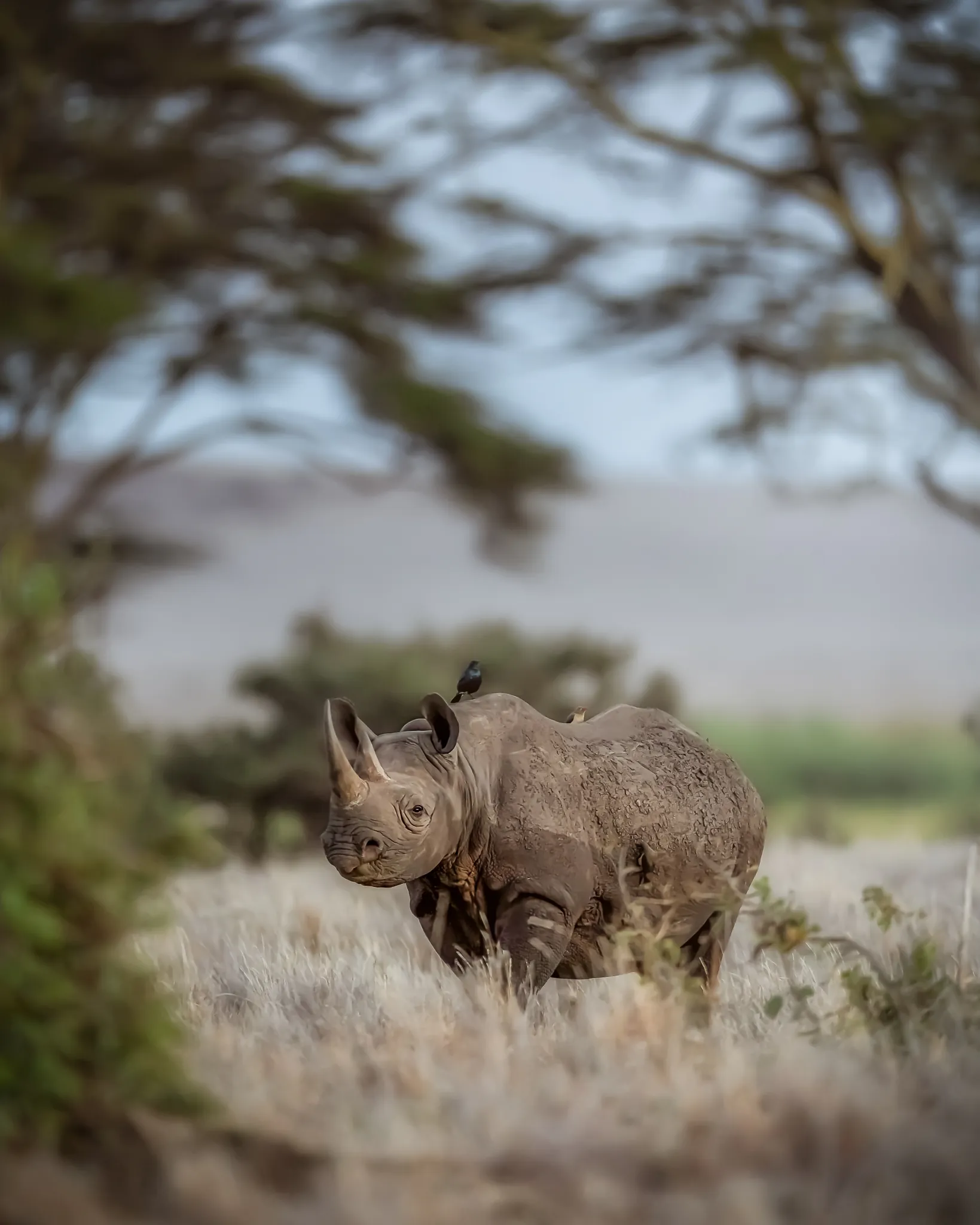 Black rhino in early-morning light on the Lewa plains, Kifaru House — Photo: Elewana Collection / Oliver Fly Photography
The black rhino is the animal everything here is organised around. Solitary, short-sighted, famously bad-tempered and very nearly lost, it is also the reason Lewa exists in its present form. To watch one graze unbothered across the open grass — with no urgency, no flight, no sense that anything is hunting it — is to understand the scale of what has been rebuilt. Beyond the rhino there is the whole northern cast: reticulated giraffe, Grevy's zebra with their fine pinstripes, Beisa oryx, the elephant herds that move through on their old routes. The plains read like a field guide that has been allowed, finally, to fill back up.
Kifaru House
Kifaru — the Swahili word for rhino — is the residential way to stay. It is just five thatched cottages set around an oasis of manicured lawns, more country house than safari camp, with the unhurried feel of a private home that happens to sit in the middle of a UNESCO site.
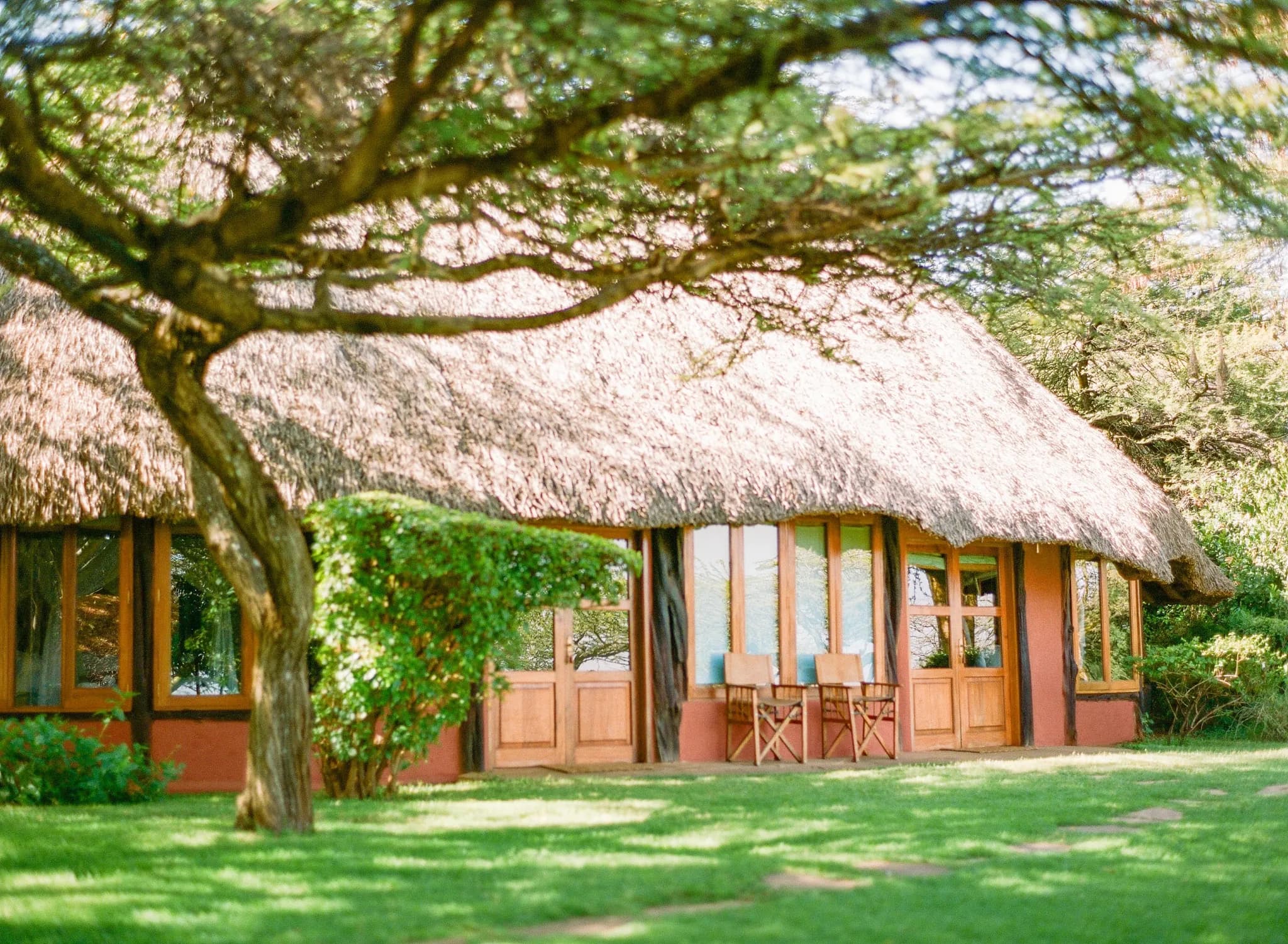 A thatched cottage on the manicured lawns at Kifaru House — Photo: Elewana Collection / Oliver Fly Photography
The smallness is the luxury. With only five cottages, Kifaru never feels like a property being run; it feels like a place being lived in. Days are loose. There are early game drives and late ones, walks across the conservancy with armed Bronze- and Silver-certified guides, a visit to the Conservancy headquarters, horse and camel riding for those who want the plains at a different pace. And there is the heated pool, set on the lawn with the wildlife wandering past the far edge of it.
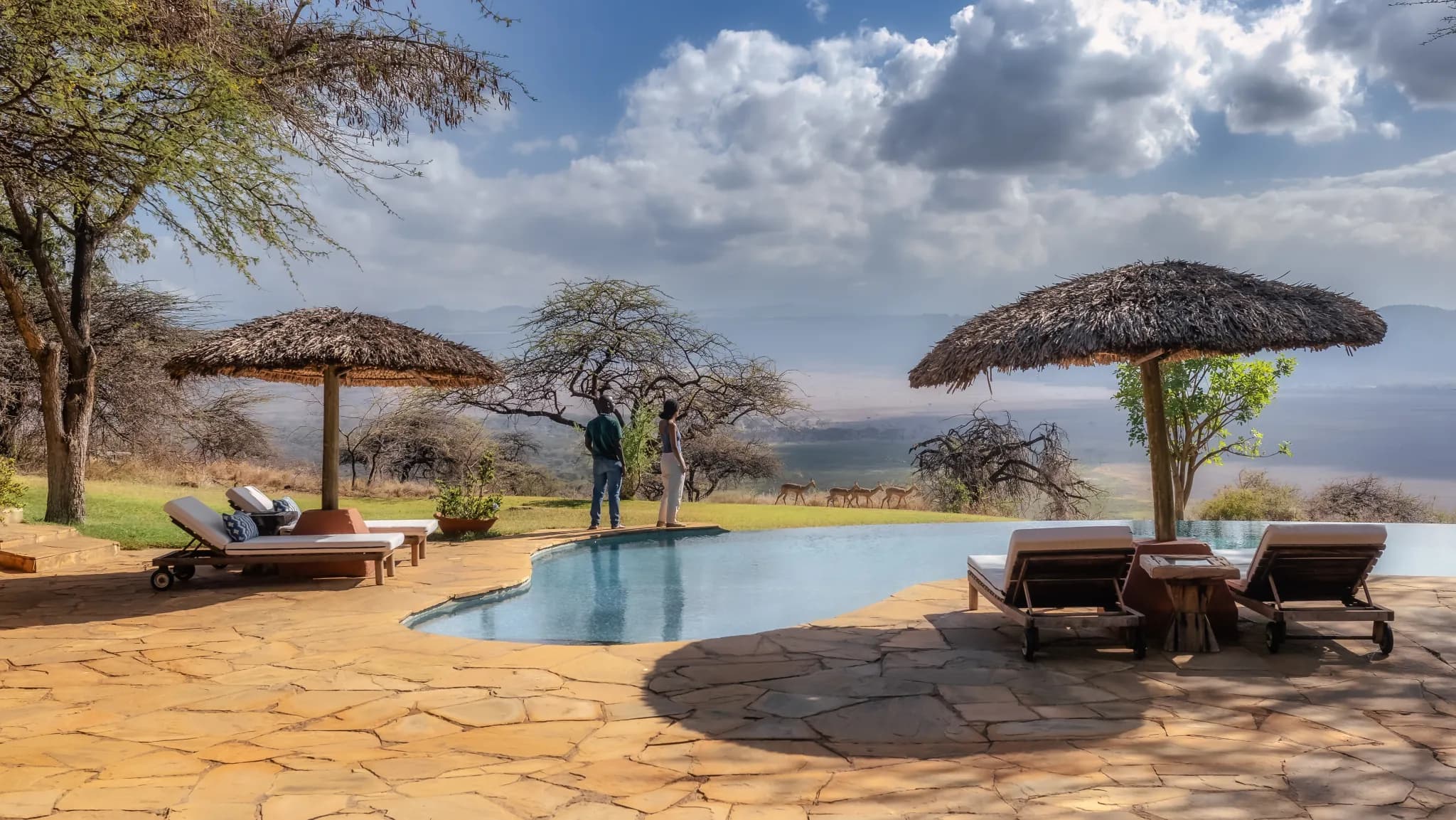 The heated pool at Kifaru House, with impala grazing on the lawn beyond — Photo: Elewana Collection
It is a faintly surreal pleasure — to swim, in the cool of a Laikipia morning, while impala graze a few yards away across the cropped grass and the conservancy runs on, vast and unbroken, past the manicured edge of the garden.
Lewa Safari Camp
The second camp tells a different story, and it is the more remarkable one. Lewa Safari Camp is the only tourism facility inside the Lewa Wildlife Conservancy that is owned by the Conservancy itself. Every fee paid, every night booked, every drink at the bar flows directly back into the work — the rangers, the dogs, the research, the rhino. To stay here is to put your money where the animals are, without an intermediary.
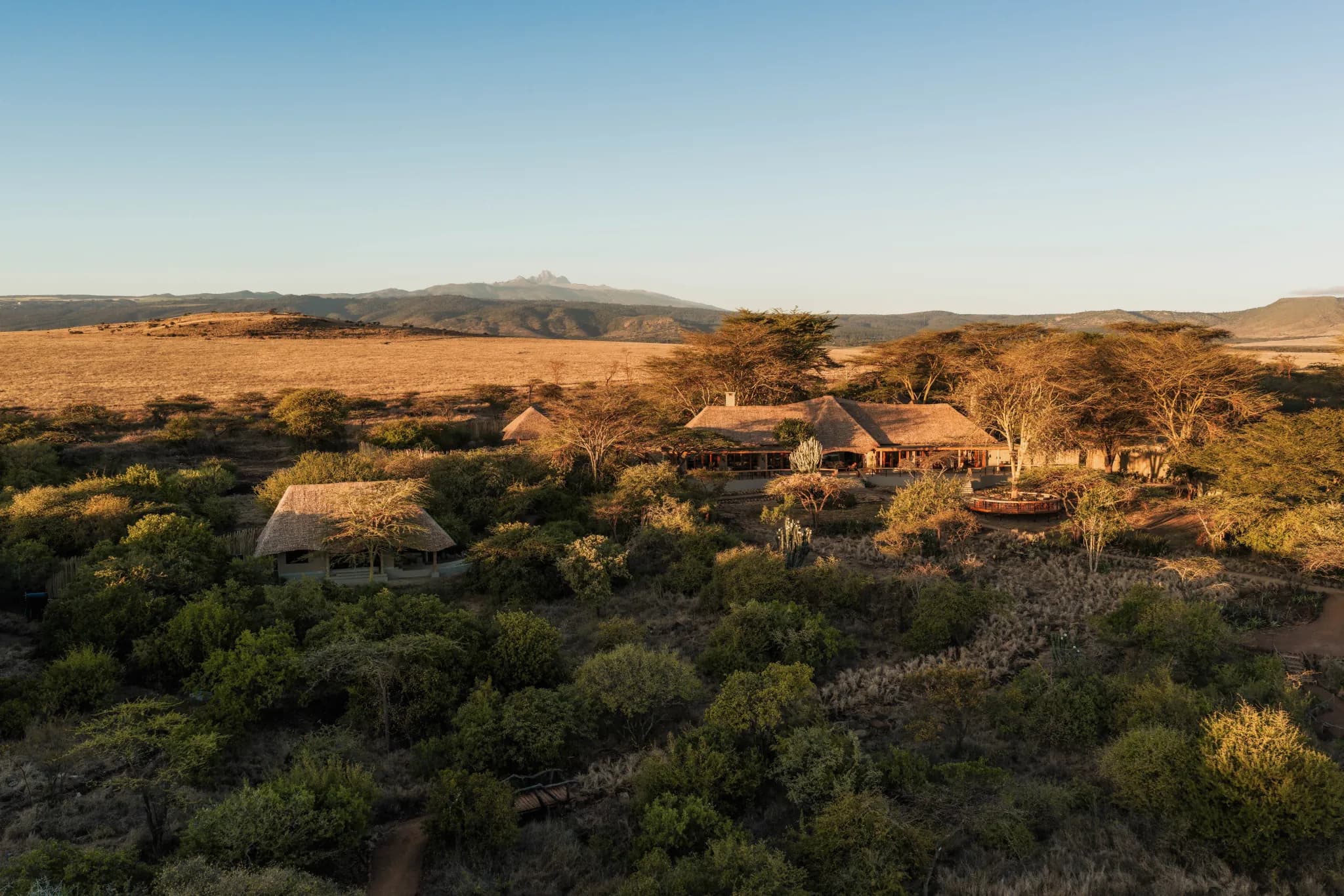 Lewa Safari Camp at sunrise, set among the conservancy bush — Photo: Elewana Collection
The camp itself is classic and unstudied: tents — standard and family — with game viewing from the verandahs, Mount Kenya rising to the south, a pool, a spa, and an animal hide for the patient. The activities mirror Kifaru's: game drives by day and after dark, walking safaris, horse and camel riding, visits to the Conservancy HQ and the surrounding communities. But the texture is different. Where Kifaru is residential, Lewa Safari Camp is unmistakably a safari camp — and the knowledge of where your money is going gives the whole stay an edge of purpose.
A guided walking safari across the open Lewa plains in the morning light — Photo: Elewana Collection
To walk here, on foot, with a guide who reads the ground the way the rest of us read a page, is the closest thing to feeling the conservancy from the inside. The plains do not perform. They simply continue, in every direction, and you are in them.
The Tracker Dogs
The most arresting thing you can witness at Lewa is not an animal at all. It is the anti-poaching tracker dogs at work — the sharp end of the operation that keeps the rhino breathing.
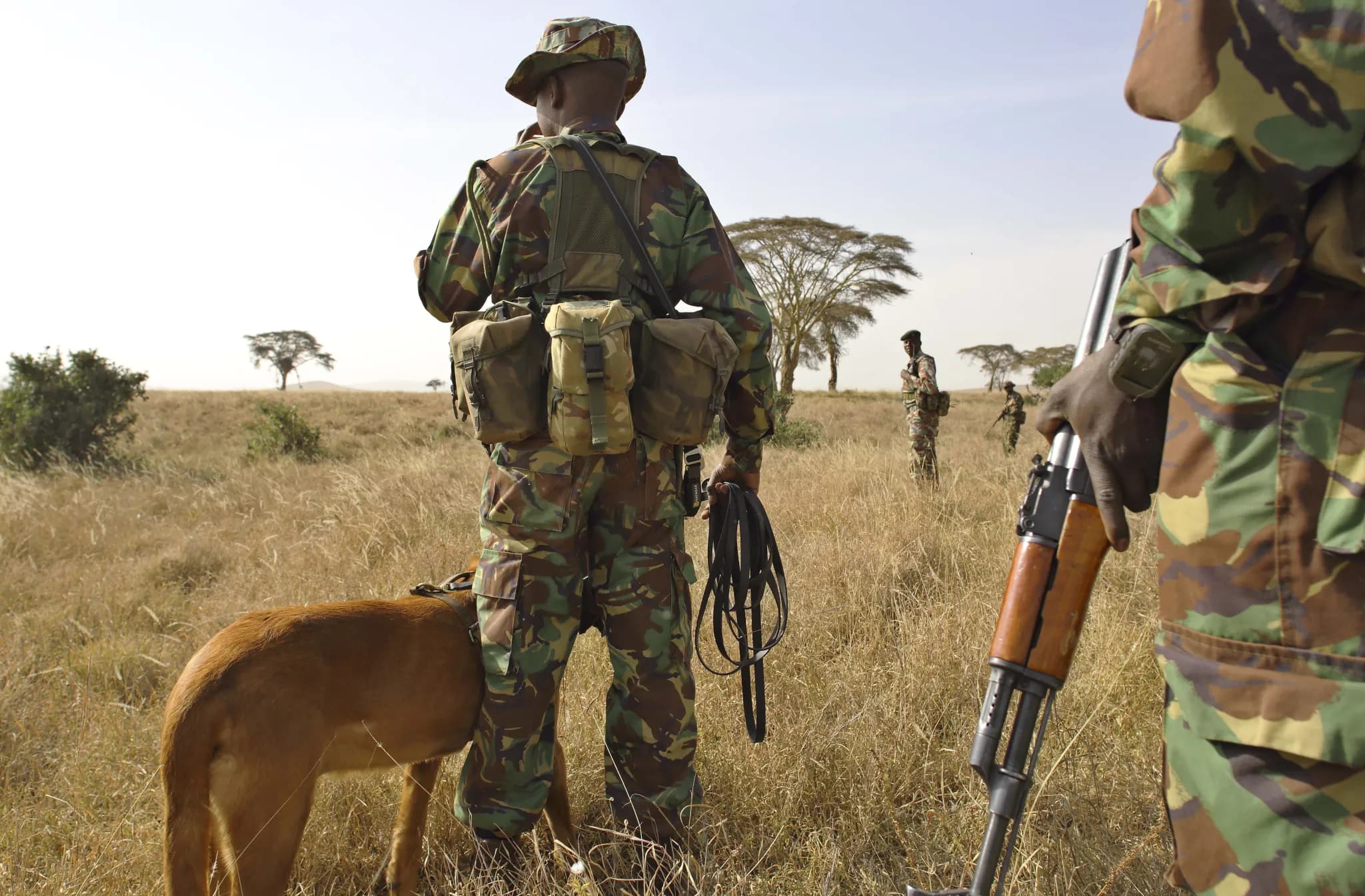 Anti-poaching tracker dogs on patrol with their handlers at Lewa — Photo: Elewana Collection
Guests at both camps can see the dogs train and deploy: bloodhounds and their handlers who can follow a scent across miles of bush, the deterrent that has helped make Lewa one of the safest places in Kenya to be a rhino. It is a sobering, clarifying thing to watch. It strips away any remaining sense that conservation here is passive — a matter of leaving the land alone. Lewa is defended, daily, by people and animals who treat it as the front line, because it is.
The Forest
For all the open plains, the most unexpected day from Lewa goes uphill, into the trees. The Ngare Ndare forest day trip trades the savannah for an indigenous cloud forest of ancient trees, clear spring-fed pools, and a canopy walkway strung between the crowns.
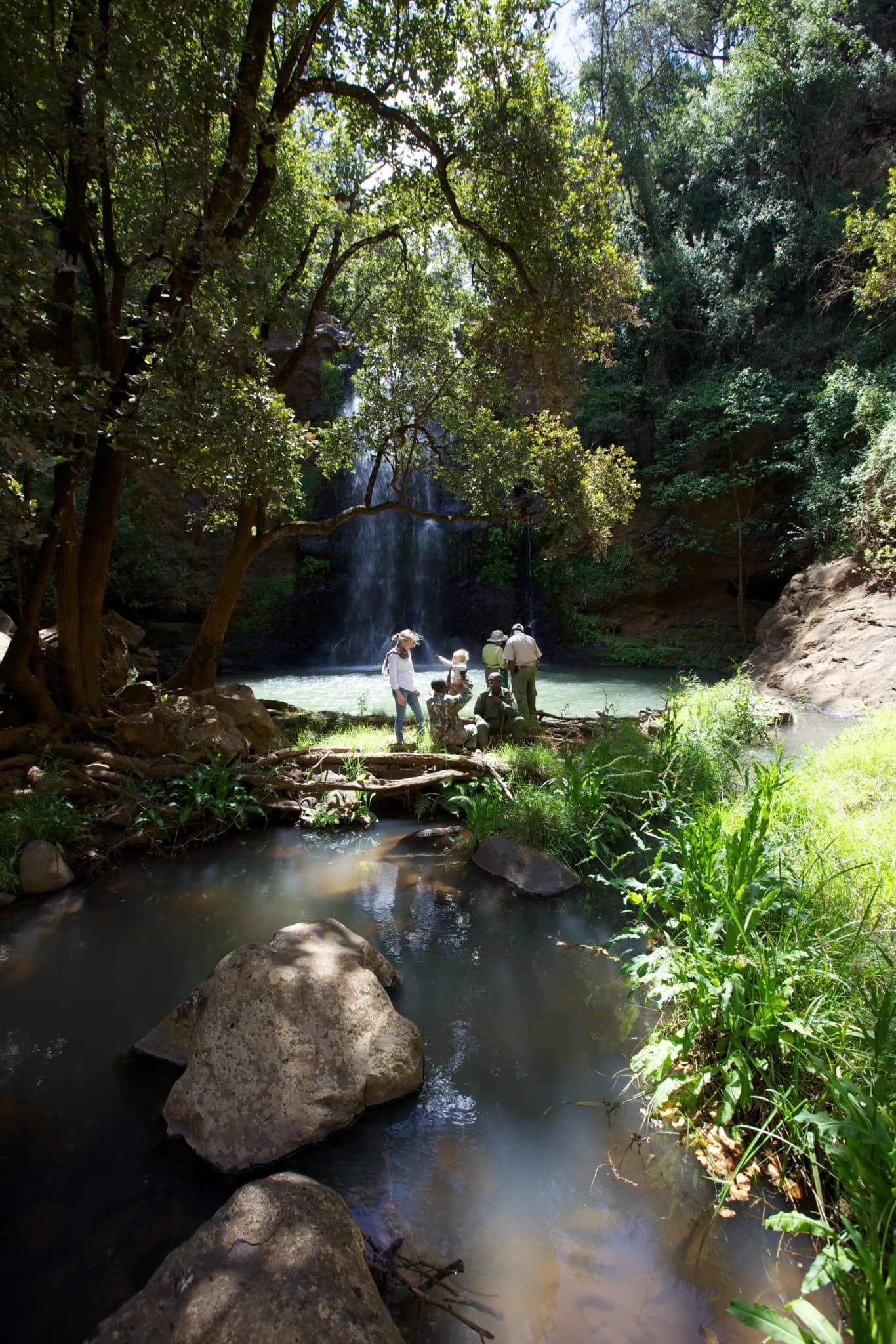 The spring-fed pools of the Ngare Ndare forest, reached on a day trip from Lewa — Photo: Elewana Collection / Niels van Gijn
You can swim in the pools — cold, glass-clear, fed straight from the mountain — and then climb to the canopy bridge and walk above the forest floor among the birds. There is also, woven through the conservancy, a quieter wonder: a prehistoric "artisan's shop", a site of ancient toolmaking shared with guests in partnership with the National Museums of Kenya, founded by the Leakeys. The land here has been worked by human hands for a very, very long time.
The Choice
So it comes down to how you want to be inside Lewa. The wildlife, the guides, the tracker dogs, the forest, the rhino — all of it is shared between the two camps. The difference is the register of the stay, and where the night you pay for finally lands.
Kifaru House is the residential choice: five thatched cottages, manicured lawns, a heated pool with impala on the far side of it, the unhurried intimacy of somewhere that feels less like a lodge than a private house lent to you for a few days. Lewa Safari Camp is the pointed one — the only tourism facility Lewa owns outright, where your stay funds the conservancy's work with nothing in between. One is the more comfortable idea of the place; the other is the place itself, declaring what it is for. Neither is wrong. Knowing the difference is the privilege.
Getting Here: Both camps are reached by scheduled charter from Nairobi's Wilson Airport to the Lewa Main Airstrip — a flight of approximately 45 minutes — followed by a 15-minute drive into the conservancy. International arrivals connect via Nairobi Jomo Kenyatta.
When to Visit: Lewa offers excellent year-round game, with the dry months either side of the rains bringing the plains animals into the open and the most reliable rhino and Grevy's zebra sightings. The forest day trip to Ngare Ndare rewards a clear, settled day.
Afrilux9 Verdict: Lewa is the rare place where the manner of your visit is inseparable from its survival — where more than a tenth of Kenya's black rhino and the world's largest population of Grevy's zebra persist because the land is worked, defended, and stayed in rather than merely admired. Both Elewana camps put you inside that machine: Kifaru House with the ease of a private home, Lewa Safari Camp with the clean conscience of money that goes straight to the cause. Choose by temperament. Either way you are not visiting the conservation flagship of northern Kenya. You are living inside it — and, for a few days, helping to keep it.
Imagery and property information courtesy of The Elewana Collection (@elewanacollection), which retains all rights.
Cover photograph: Elewana Collection
Part of our guide to Laikipia & Northern Kenya.
More from Laikipia & Northern Kenya
Inspired by This Journey?
Search flights and hotels to start planning your own African escape.
Begin Your Journey