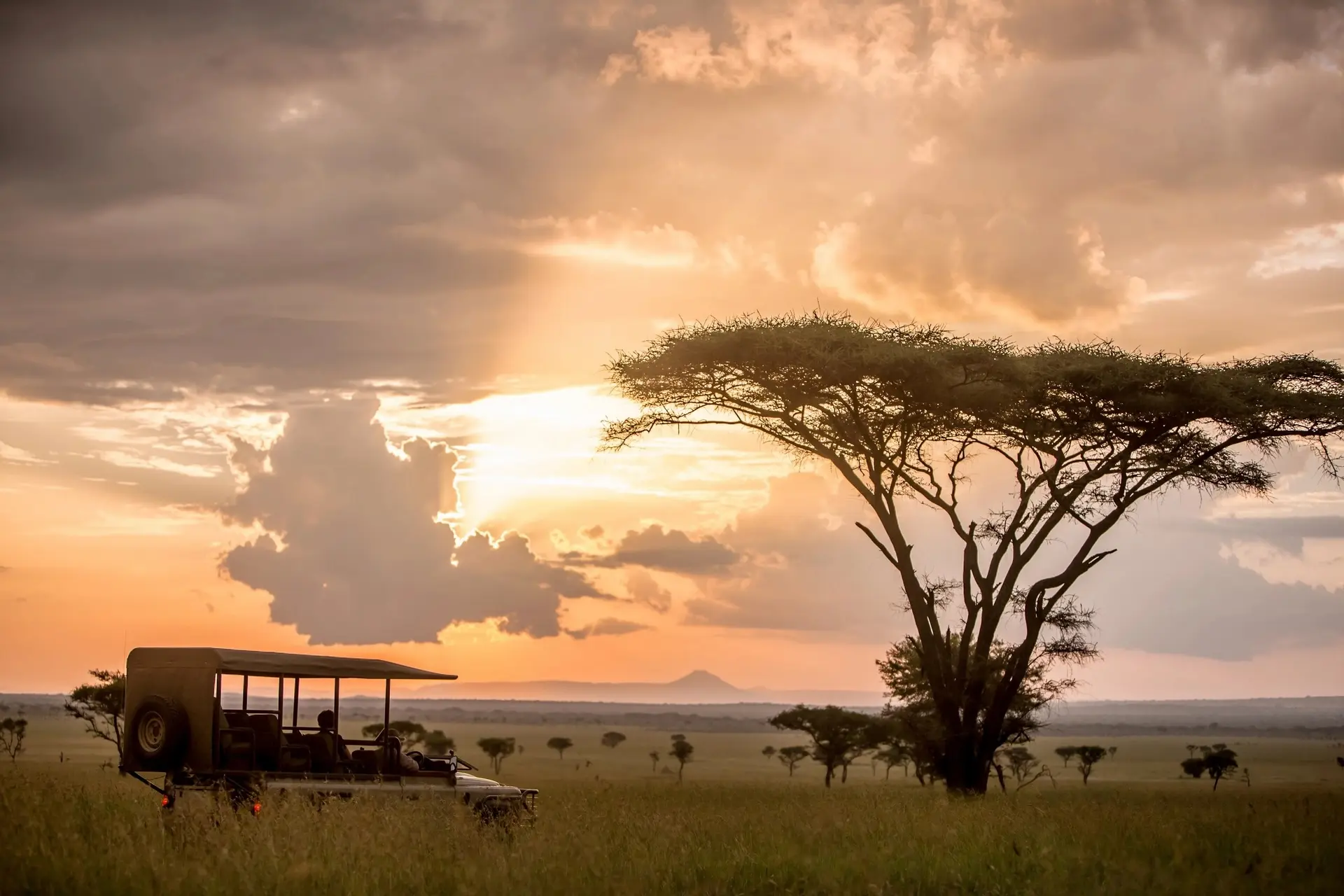
Kenya or Tanzania for the Migration: How We'd Choose
I grew up in Tanzania, and for most of my childhood the rivalry between Kenya and Tanzania over the safari was something adults argued about with the easy confidence of people defending a home team. It took me years — and a good deal of distance — to understand that the argument is mostly a misunderstanding. The Great Migration is not a Kenyan event or a Tanzanian one. It is a single herd of well over a million wildebeest, joined by hundreds of thousands of zebra and gazelle, moving in a slow clockwise loop through one connected ecosystem. A border drawn on a map in 1885 happens to run through the middle of it. The animals have never read the map.
So the real question is never "which country is better." It is "which part of the loop, at which time of year, in which style of travel, suits the trip you actually want." That is a far more useful question, and it has a far more honest answer. Here is how I think it through.
One herd, one ecosystem, two front doors
The Serengeti in Tanzania and the Maasai Mara in Kenya are not two destinations. They are the southern and northern reaches of the same grasslands — the Serengeti-Mara ecosystem — and the migration spends the bulk of its year in Tanzania simply because the Serengeti is vastly larger. The Mara is the dramatic northern tip the herds reach for only a few months.
That single fact resolves most of the confusion. If you picture the migration as a great wheel turning slowly through the year, Tanzania holds maybe three-quarters of the rim and Kenya holds the rest — but the part Kenya holds happens to contain the most photographed moment in African wildlife: the river crossing.
The timing, told honestly
Most "best time to visit" advice flattens the migration into a single peak. It is not one event; it is a continuous year, and different chapters of it are extraordinary for entirely different reasons. This is the part worth getting right, because it determines everything else.
December to March — the southern Serengeti and Ndutu (Tanzania). This is calving season, and in my view it is the most underrated chapter of the whole cycle. Across a few short weeks, several hundred thousand calves are born on the short-grass plains — a concentration of new life that draws predators in numbers you will not see at any other time. People fixate on the crossings; the cognoscenti quietly book the calving. It is Tanzania's alone.
April to May — the long rains. The herds drift north and west through the central Serengeti. The land is green and beautiful, the light is soft, the camps are quietest and least expensive, and you will share it with almost no one. The trade-off is genuine rain and the chance of a wet road. I rate this for returning travellers and photographers, not for a once-in-a-lifetime first trip.
June to July — the western corridor and the Grumeti (Tanzania). The first great river drama, on the Grumeti, still inside Tanzania. Less famous than the Mara River and, for that reason, less crowded.
Late July to October — the Mara River crossings (mostly Kenya, with the northern Serengeti). This is the season that built the legend: thousands of animals massing on a bank, hesitating, then pouring across crocodile-filled water. It plays out along the Mara River, which straddles the border — the northern Serengeti sees crossings too — but Kenya's Maasai Mara is the classic stage, and these months are why most people think "Kenya" when they think "migration."
November — the short rains, herds turning south again. The wheel comes back around toward the calving grounds, and the year begins again.
The thing I most want a first-time traveller to absorb: there is no single right month, only a right month for the experience you are after. Crossings and calving are almost opposite ends of the calendar, and chasing both in one trip means chasing nothing well.
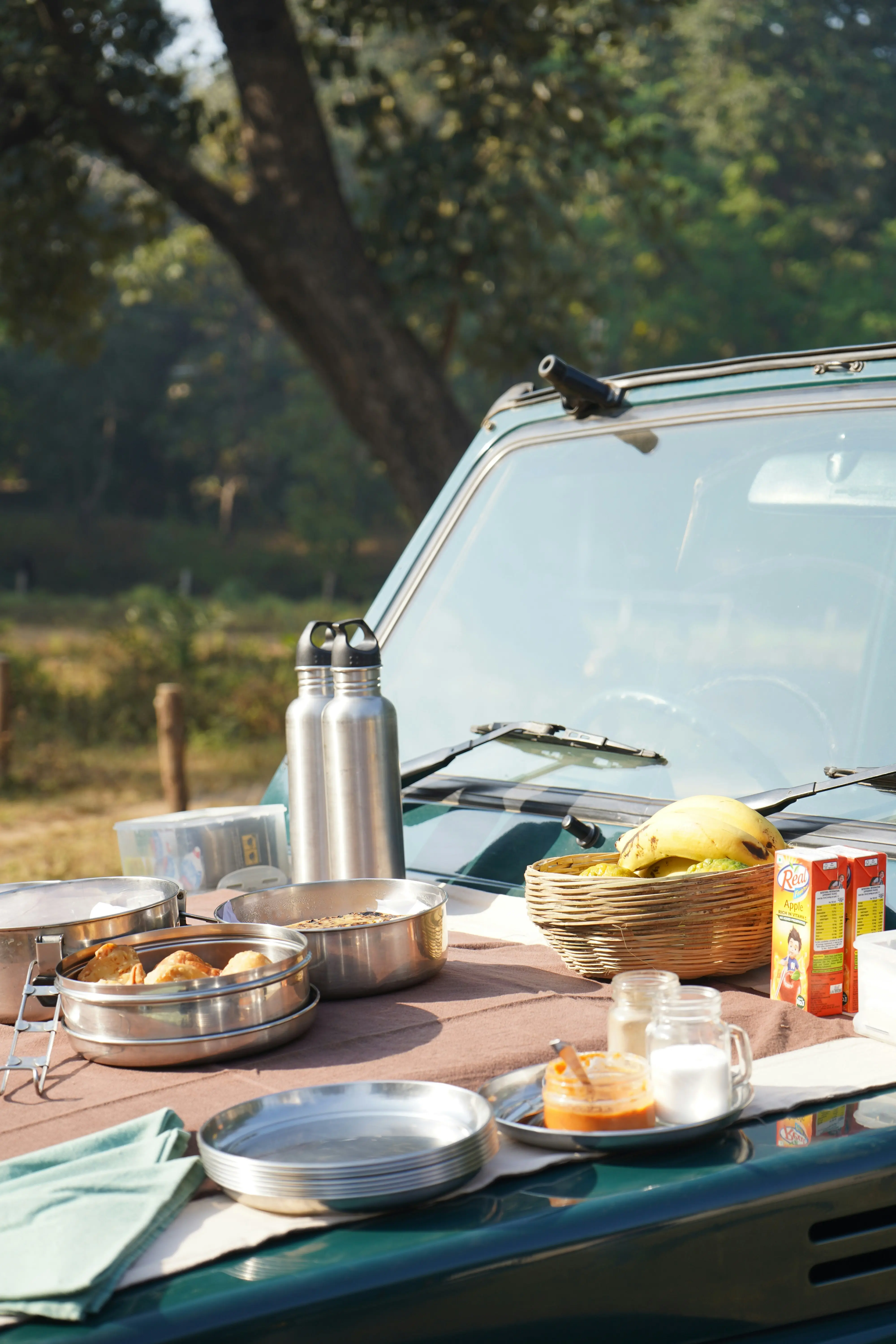 Soft early light on the plains — the migration is a year-round event, not a single peak.
The case for Kenya
Kenya's Maasai Mara is, hour for hour, the most reliably rewarding game-viewing I know. The reserve and its surrounding conservancies hold extraordinary densities of big cats — lion, cheetah, leopard — across open, rolling grassland that makes them easy to find and a joy to photograph. From roughly late July to October, it is also the home of the river crossings. If the image in your head is the one everyone has seen, Kenya is where you stand to watch it happen.
Kenya rewards you in other ways too. It is the easier country to reach and to move around: Nairobi is a major international hub, internal flights are frequent, and you can string together genuinely different worlds in one trip — the Mara's plains, the elephants of Amboseli beneath Kilimanjaro, the rhino conservancies of Laikipia in the north. The conservancy model that has grown up around the Mara is, to my mind, one of the best things to happen to African tourism: lower vehicle numbers, walking and night drives that the main reserve does not permit, and revenue flowing directly to the Maasai communities who own the land.
The honest trade-off is crowding. The public reserve in high season can put a great many vehicles around a single crossing, and it can puncture the sense of wilderness people travel so far to feel. The answer is to favour the private conservancies on the reserve's edges, where vehicle numbers are capped — but that is a choice you have to make deliberately, not one the destination makes for you.
The case for Tanzania
I will admit my bias and then defend it on the merits. Tanzania offers scale — a sense of unbroken, horizon-to-horizon wilderness that is increasingly rare and, for many people, the entire point. The Serengeti is enormous, and even in busy seasons it absorbs visitors in a way the Mara's smaller stage cannot. For travellers whose deepest wish is to feel genuinely far from the modern world, this is the difference that matters most.
Tanzania also holds two things Kenya simply does not. The first is the calving season, which I rate above the crossings for sheer concentrated drama and which is far less known. The second is the Ngorongoro Crater — a collapsed volcanic caldera holding a self-contained world of wildlife on its floor, including one of the more reliable chances to see black rhino in the wild (for sheer rhino numbers, Kenya's Laikipia conservancies still lead). Pair the Serengeti with the Crater and with Tarangire's baobab country, and you have what is often called the Northern Circuit: a single, coherent, world-class journey.
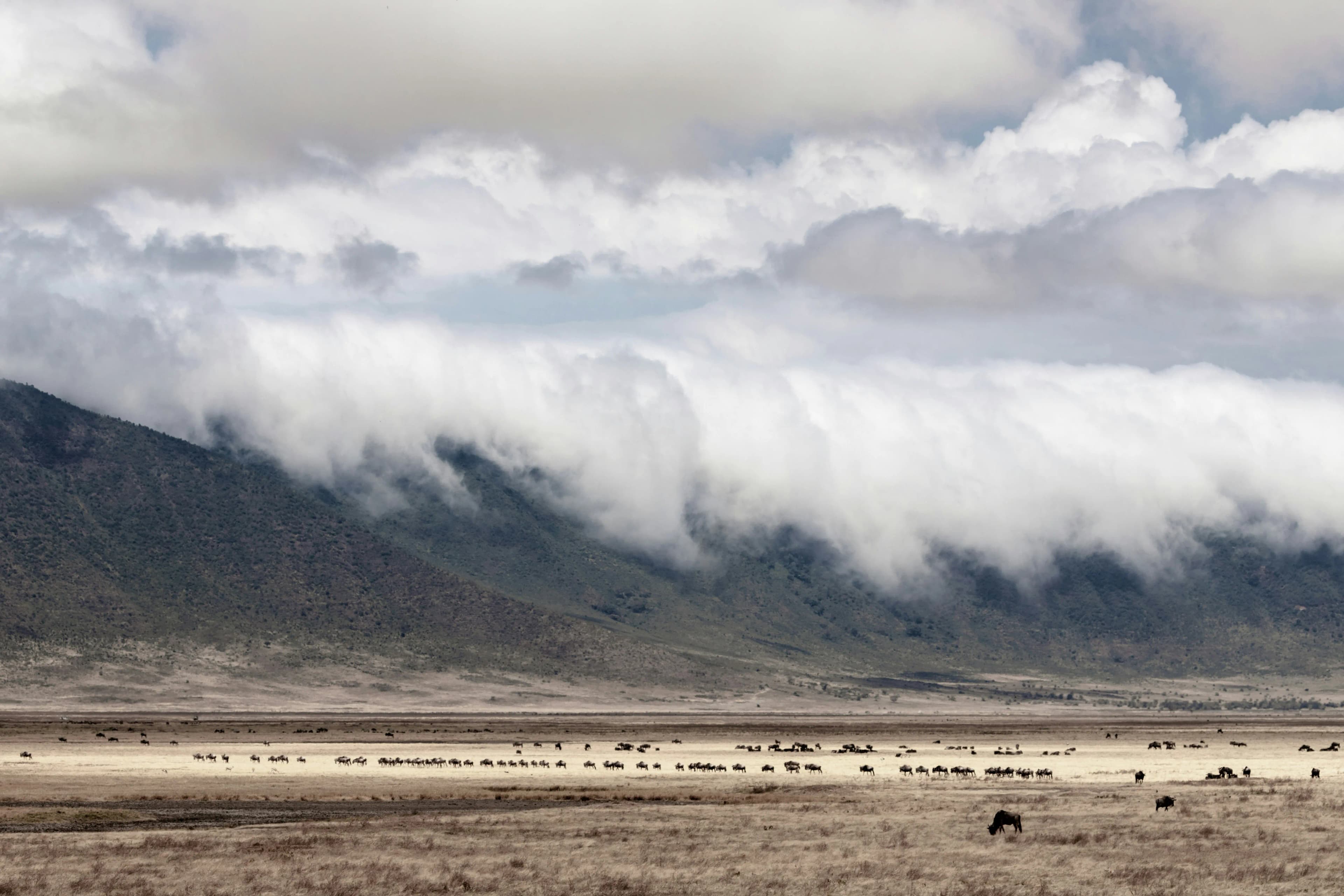 Mist over the Ngorongoro Crater — a self-contained world Kenya has no equivalent of.
The trade-offs are real and worth naming. Tanzania is generally the more expensive country once internal flights and park fees are tallied, the distances between highlights are longer, and the logistics ask a little more patience. You are buying scale and a quieter wilderness, and scale costs more to cross.
How we'd choose
Strip away the romance and it comes down to a few honest questions.
If this is your first safari and you want the iconic river-crossing image, go to Kenya, in the late-July-to-October window, and stay in a private conservancy on the edge of the Mara rather than deep in the public reserve. You will get the spectacle, the big cats, and the easiest logistics, and the conservancy will spare you the worst of the crowds.
If what you crave most is wilderness on an overwhelming scale — and quiet, go to Tanzania. The Serengeti's size is its gift. Build the Northern Circuit around it so the Crater and Tarangire earn their place in the trip.
If you are drawn to predators and new life over the famous crossings, go to Tanzania in calving season, December to March, to the southern plains. This is the chapter the crowds overlook, and it is the one I would book first for myself.
If you are a photographer or a returning traveller chasing light, space and solitude over headline drama, consider the green, low-season months in the central Serengeti. You will trade certainty for a private version of the most famous place in the safari world.
And if you genuinely cannot choose, remember that the border is a formality the animals ignore. A well-built trip can begin in the northern Serengeti and cross into the Mara — following the herds across the river that divides the two countries — so that the migration, not the map, sets your route. It is more involved to arrange, but it is the truest way to experience a single ecosystem as the single thing it is.
A few practical honesties
Neither country has a "cheap" version of this done well; a migration trip at the quality these landscapes deserve is a serious undertaking, and the months around the river crossings are the most expensive and the most heavily booked — often a year ahead. Both countries require yellow-fever awareness and antimalarial precautions, and both reward a longer, slower trip over a rushed one. Most importantly: weather and wildlife keep their own counsel. The migration is a pattern, not a timetable, and anyone who promises you a crossing on a particular afternoon is selling certainty that does not exist. The craft is in stacking the odds — the right region, the right month, enough days — and then letting the place surprise you, which it always does.
Our verdict: There is no winner, because it was never a contest — it is one herd, one ecosystem, and a border the wildebeest have never honoured. Kenya gives you the iconic crossing, the densest cats, and the easiest journey. Tanzania gives you scale, silence, the Crater, and the calving season I would quietly choose first. Decide which of those you are travelling for, pick the month that belongs to it, and the country chooses itself.
If you are weighing this for a trip of your own, tell us what you have in mind — the time of year you can travel, what you most want to see — and we will help you think it through honestly.
How We'd Choose
Which version of the migration are you travelling for?
Inspired by This Journey?
Search flights and hotels to start planning your own African escape.
Begin Your Journey