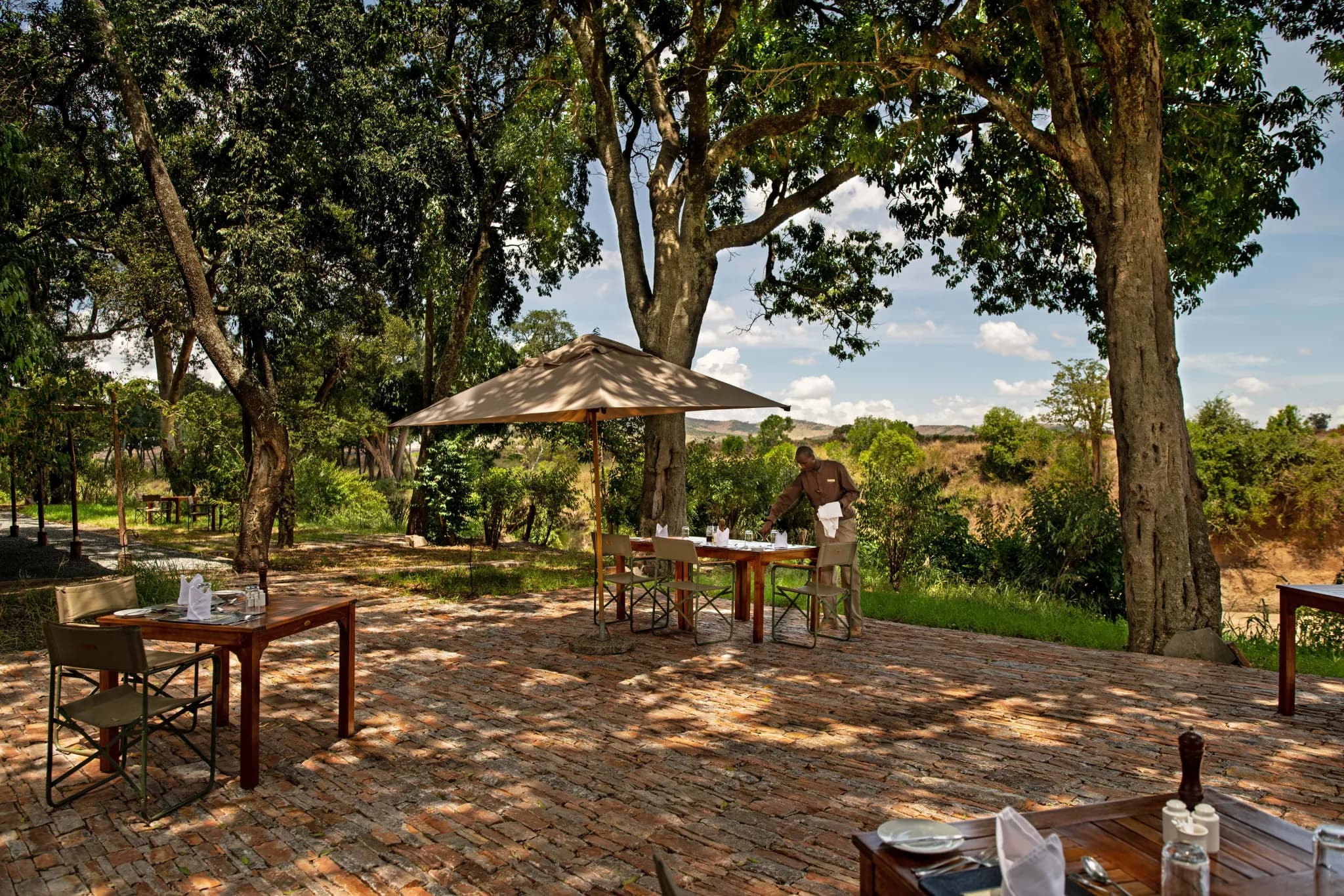
Yesteryear in the Conservancy: Two Classic Camps of the Masai Mara
There is a version of safari that predates the infinity pool and the floor-to-ceiling glass — older, quieter, more attentive. Canvas and lamplight. A campfire as the evening's only entertainment. A guide who knows the ground because he has walked it. It is the safari of the 1920s, and it is the one most people are picturing when they first imagine coming to Africa, even if they have never seen it.
The Masai Mara holds two camps that keep that idea alive without turning it into pastiche. Elephant Pepper Camp sits deep in the Mara North Conservancy, one of Kenya's original small tented camps — so unhurried that elephant pass through it at night, drawn by the salt-rich grasses. Sand River sits an hour or so away on the banks of its namesake river, built in late-1920s safari style and pitched, deliberately, on a point where the Great Migration crosses — so the herds weave through the camp itself.
Neither is trying to be modern. Both are trying to be true. They are the same instinct expressed twice, and between them they make the case that the most luxurious thing the Mara can offer is not a view from a hilltop but the feeling of being quietly, completely inside it.
The Golden Age
The phrase "safari of yesteryear" is worn thin by brochures, but at Elephant Pepper it means something specific. The camp keeps its decor deliberately of-an-era — campaign furniture, leather, brass, lamplight — and, on a writing desk in the mess tent, a vintage typewriter that nobody pretends is decorative theatre so much as a small honest signal of when this kind of travel began.
 A vintage typewriter and lantern in the mess tent at Elephant Pepper Camp — Photo: Elewana Collection
It is the detail that tells you what to expect from the rest. There is no rush here, no schedule that needs you. Days are shaped by light rather than the clock: out before dawn, back as the heat builds, the long flat hours of midday given over to a book or a hammock, and out again as the plains soften towards evening. The point of a camp like this is not what it adds but what it removes.
Elephant Pepper: The Conservancy
Elephant Pepper's address is its argument. It sits within the Mara North Conservancy, where game-driving is restricted to the conservancy's own lodges — which means no convoy of minibuses arriving from outside, no crowding at a sighting, no jostle for position at a kill. When you find something here, you tend to have it to yourself.
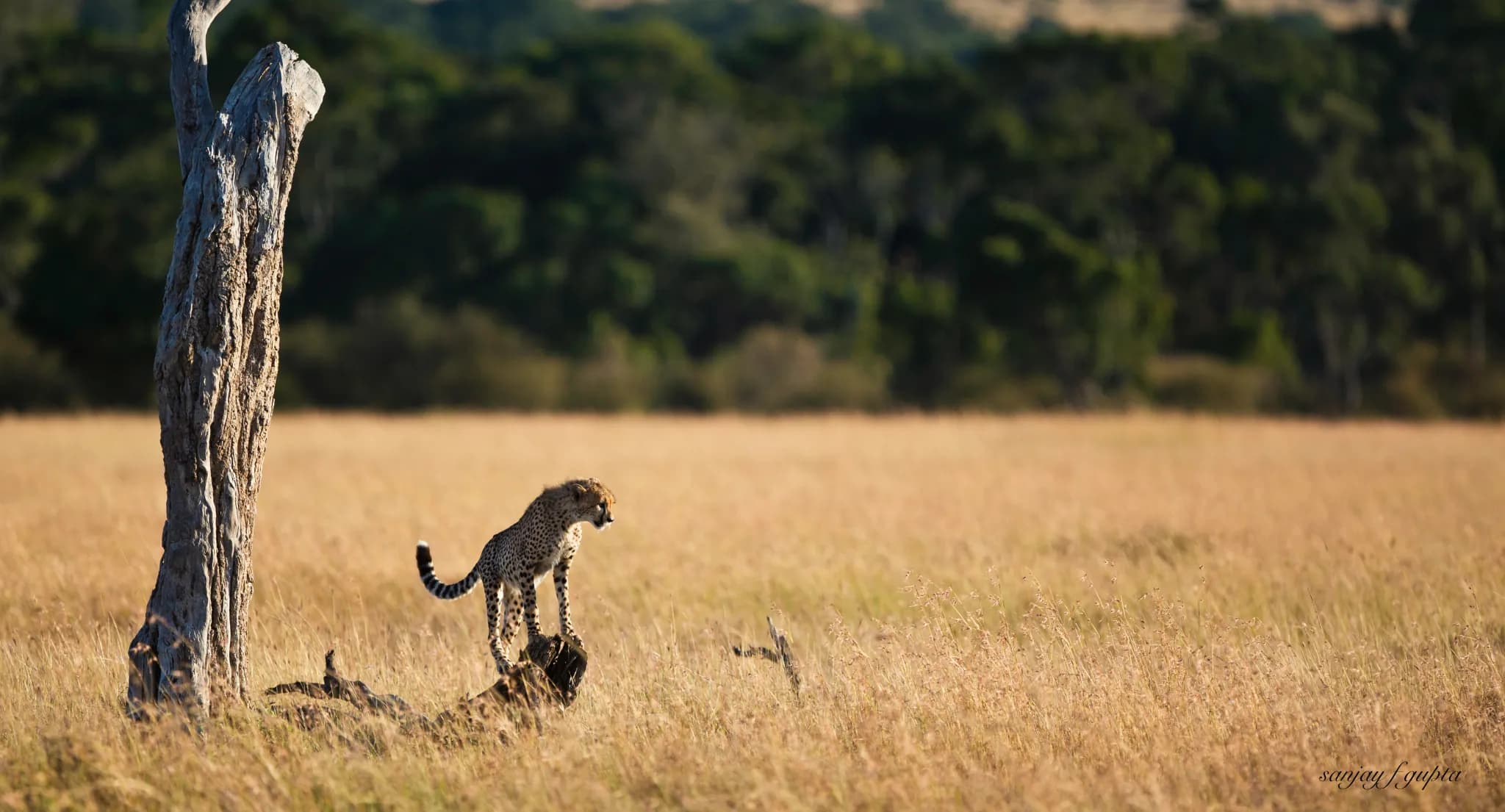 A cheetah surveying the plains from a fallen log in Mara North — Photo: Elewana Collection / Sanjay F. Gupta
The conservancy model is the quiet engine behind everything that makes the place feel uncrowded, and the wildlife responds to it. Cheetah hunt the open grass; lion hold territory across the rolling country; and the camp's namesake elephant move through unbothered, sometimes through the camp itself, drawn by the mineral-rich grasses and springs near the honeymoon tent. The crossing points of the Great Migration are roughly half an hour away, close enough for a full-day drive with a picnic but far enough that the spectacle never becomes the whole of your stay.
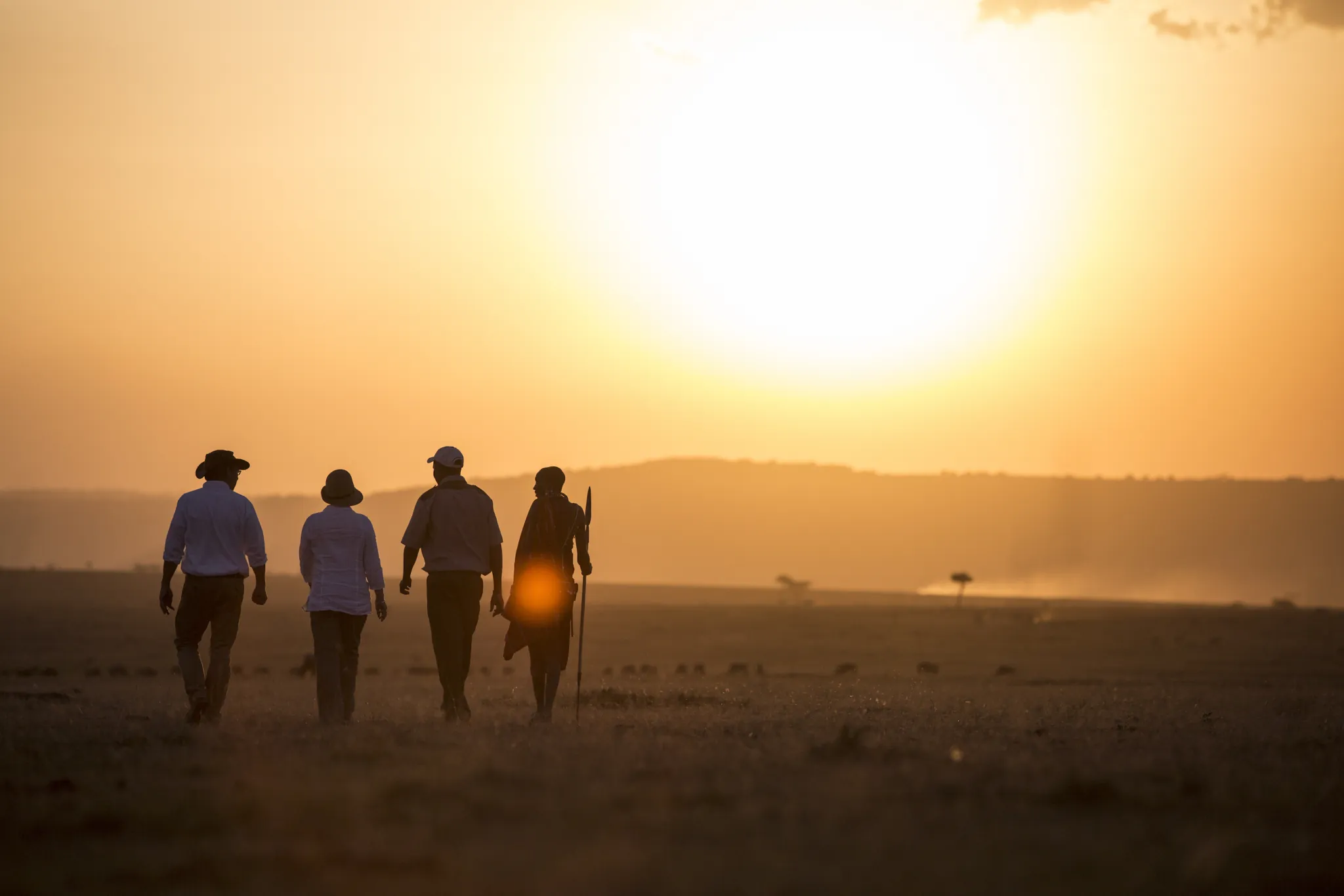 Guests and a Maasai guide on a walking safari at sunset near Elephant Pepper Camp — Photo: Elewana Collection / Silverless
Mornings on foot are part of the offer — guided bush walks that read the ground at a human pace, with the usual sensible limits for younger children. The pleasures here are old-fashioned in the best sense: a hand of croquet on the grass, a lesson in making fire or fashioning a bow, a school visit through the Land & Life Foundation that connects the camp to the community whose land sustains it.
The Campfire
Every evening at Elephant Pepper ends the same way, and it is the heart of the place. The fire is lit in the open, ringed by canvas chairs, with the plains running out flat and grey to the horizon behind it. There is no bar to retreat to, no lounge with a television. There is the fire, and the dark, and whoever else is in camp.
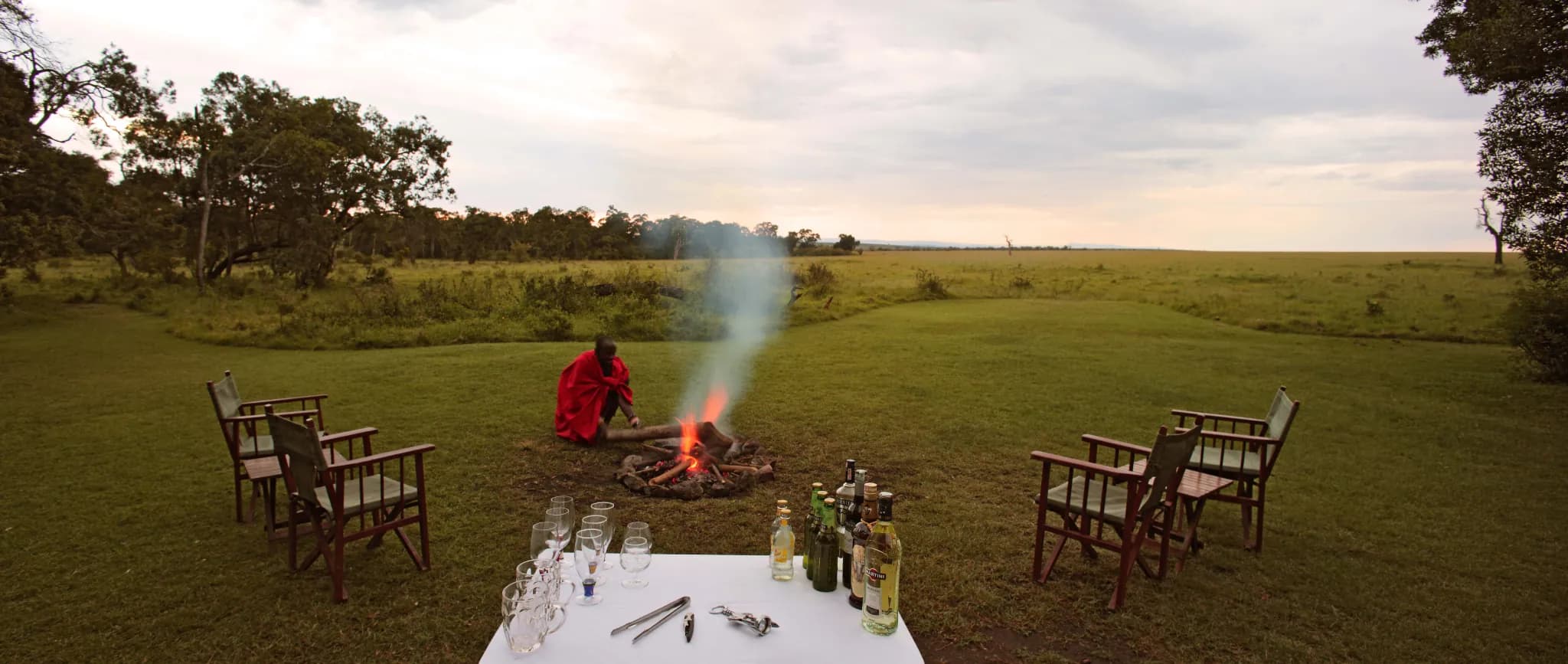 A Maasai guide tends the open campfire at dusk at Elephant Pepper Camp, the plains stretching beyond — Photo: Elewana Collection
This is the social architecture of an older safari, when the camp was small enough that everyone knew everyone by the second night. Drinks appear; conversation finds its level; the guides tell you what you saw and what it meant. The elephant that walk through after dark are not a scheduled event — you simply hear them, close, in the blackness beyond the firelight, and understand that you are a guest in their country rather than the other way round.
Sand River: The Crossing
An hour or so south, inside the Masai Mara National Reserve proper, Sand River makes the same case from a different angle. Where Elephant Pepper is woven into a conservancy, Sand River is pinned to a single decisive feature: it sits on the banks of the Sand River, directly on a point where the Great Migration crosses. The herds do not pass nearby. They weave through the camp.
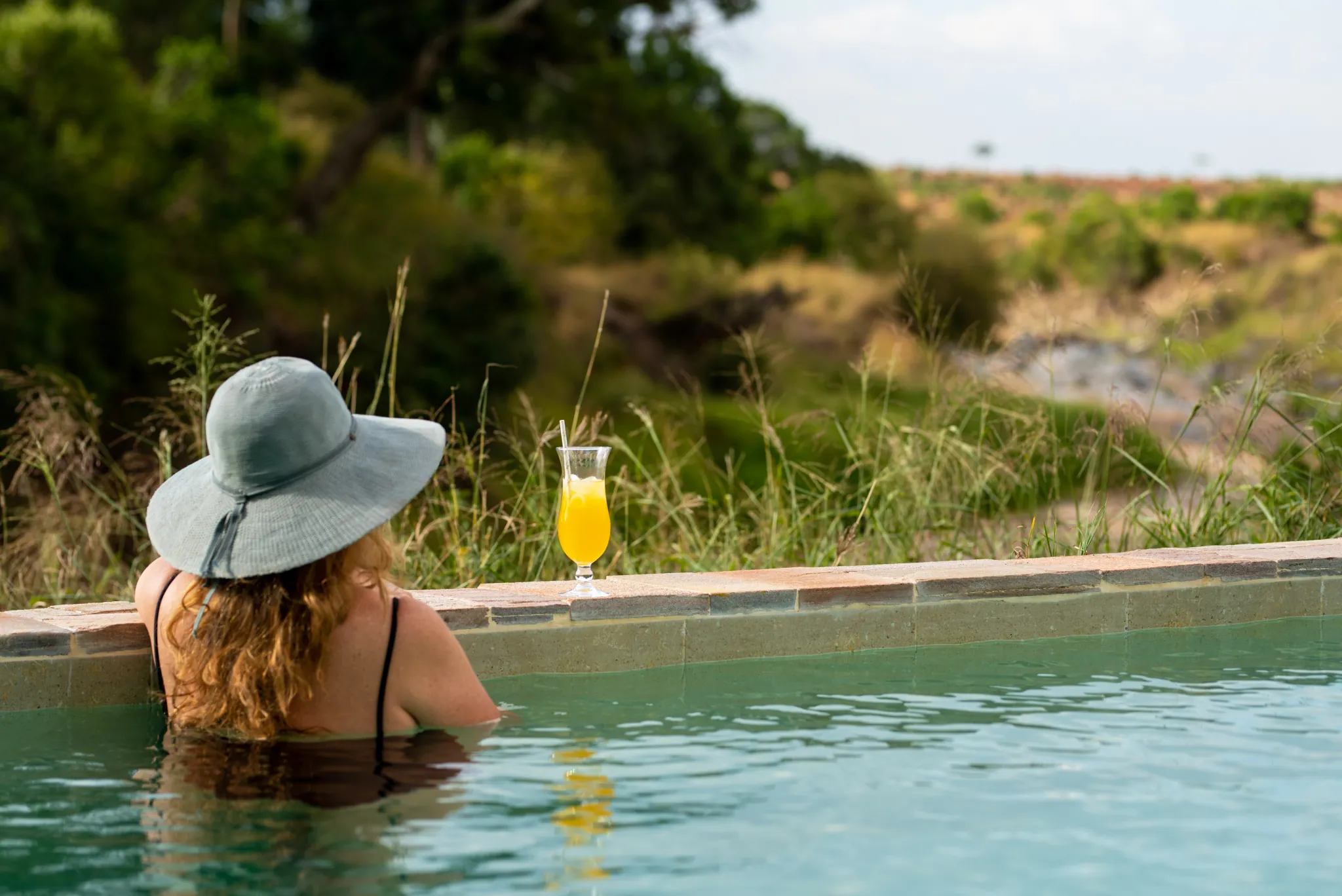 The infinity pool at Sand River, looking out over the river valley — Photo: Elewana Collection / Silverless
The architecture is unashamedly nostalgic — built in late-1920s safari style, all canvas and timber and river-facing verandahs, with an infinity pool poised above the valley. The luxury tents come as doubles or twins with outdoor showers; there is a family tent for those travelling with children. None of it strains for novelty. The whole point is the verandah and what crosses in front of it.
That commitment to place comes with a conscience: Sand River is Gold eco-rated, supports a local school through the Land & Life Foundation, and sits in black rhino territory within a reserve that holds the Big Five and big cats year-round. You do not have to wait for migration season to find a reason to come — but when the herds are moving, there are few seats in Africa quite like this one.
Little Sand River
For those who want the camp to themselves, Sand River keeps a satellite a short way along the bank: Little Sand River, a smaller, self-contained set of tents and main areas designed for exclusive, private use. It is the answer to a particular kind of trip — a family taking over a camp, a small group of friends, a celebration that wants no strangers at the fire.
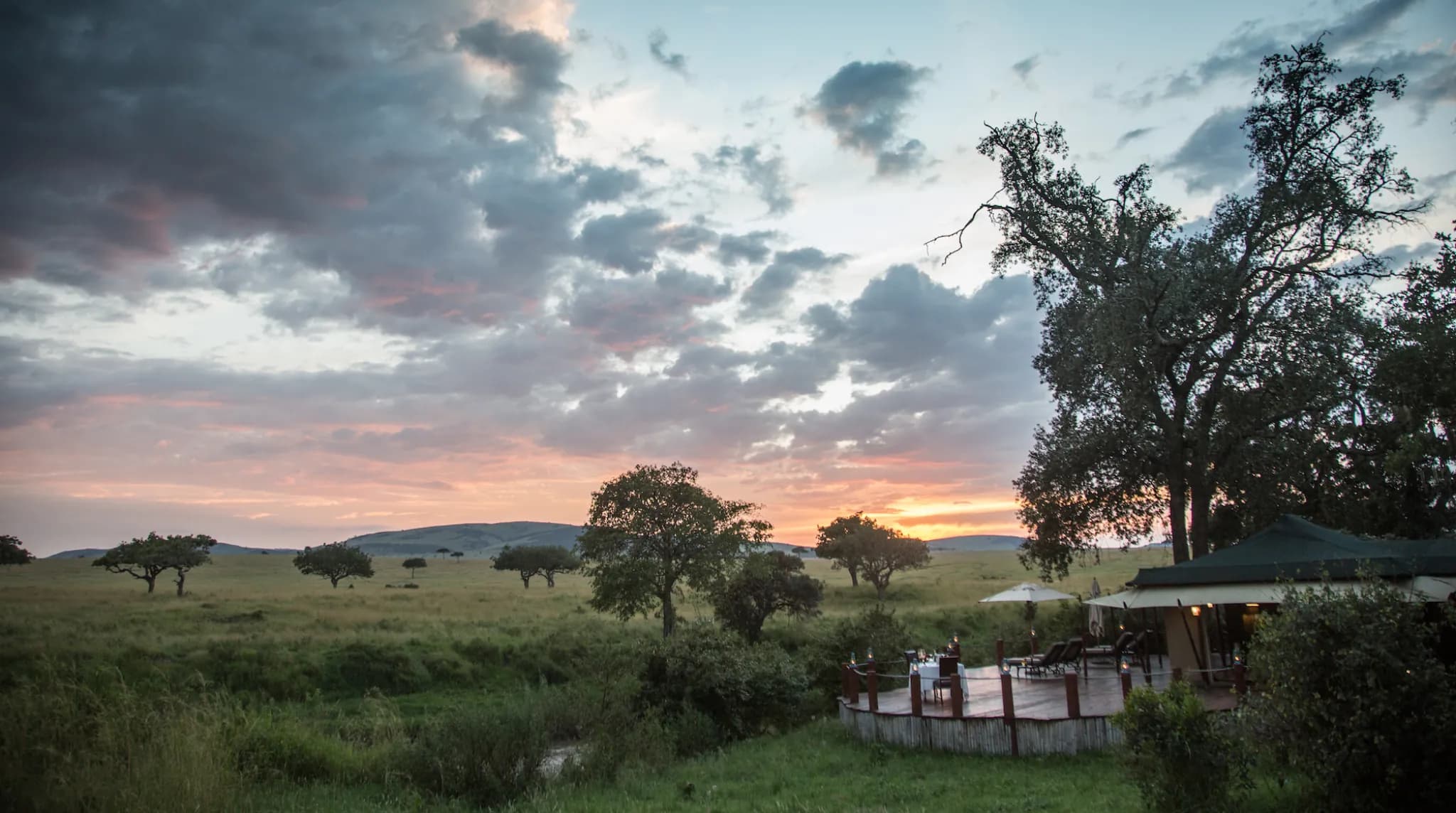 Little Sand River lit against the dusk, its deck set above the river — Photo: Elewana Collection / Silverless
The appeal is simple and old-fashioned: the same river, the same crossing point, the same golden-age style, but with the guest list reduced to people you chose. Private campfire dinners, your own rhythm, no negotiation over departure times. In a part of the world increasingly given over to scale, the ability to book the whole of a small thing is its own rare luxury.
The Migration
Both camps live in relationship with the same event. During the migration months, vast numbers of wildebeest and zebra mass on the banks and weave their way across the Sand River — a frantic crossing the camps describe as the heart of the action. Sand River's position puts you on the front row of it: guests are often fortunate enough to watch the herds cross from the comfort of their tent verandah.
The Great Migration crossing the Sand River — wildebeest and zebra on the move — Photo: Elewana Collection
But the migration is not the only reason to come, and the camps are honest about that. Outside the crossing months the Mara empties of crowds while keeping its resident game — lion, leopard, cheetah, elephant, the year-round Big Five — and a stay becomes slower, quieter, more about the texture of the place than the headline event. From either camp a full-day drive with a picnic can reach the river when the herds are running; the rest of the year, the plains are yours.
Getting Here: Both camps are reached by scheduled charter from Nairobi's Wilson Airport, roughly 45 minutes' flight. Elephant Pepper is served by the Mara North airstrip, a 30-minute drive from camp (or Musiara, around an hour); Sand River is reached via the Keekorok airstrip, about a 45-minute drive on.
When to Visit: During the migration months for the Mara River crossings and the sheer numbers of animals on the move. Outside the migration months the reserve is still teeming with game — lion, leopard, cheetah, elephant and the resident Big Five — and game spotting is generally excellent year-round.
Afrilux9 Verdict: Elephant Pepper and Sand River are the same conviction approached from two directions: that the finest version of a Mara safari is the oldest one, stripped of spectacle and built on intimacy. Elephant Pepper gives you a near-private conservancy, a fire to gather at, and elephant in the dark; Sand River gives you a 1920s verandah on a migration crossing and the option, at Little Sand River, of taking the whole of it private. Choose either for a classic stay. Choose both, in sequence, for the most complete picture the Mara can give — the conservancy and the crossing, the campfire and the river, the two halves of what safari was before it learned to show off.
Imagery and property information courtesy of The Elewana Collection (@elewanacollection), which retains all rights.
Cover photograph: Elewana Collection
Part of our guide to Kenya's Masai Mara.
More from Kenya's Masai Mara
Inspired by This Journey?
Search flights and hotels to start planning your own African escape.
Begin Your Journey