From Tree to Cup: Arusha Coffee Lodge and the Art of the Gateway Night
Every northern Tanzania safari has a gateway night that nobody plans for and everybody needs. You land late at Kilimanjaro, or you come off the circuit dusty and full, and there is a town called Arusha between you and the wild. Most people treat it as a transaction — a room near the airport, a bag repacked, an early start. They are missing the point.
Arusha Coffee Lodge sits inside a working coffee plantation on the edge of the city, a sanctuary of leafy gardens and old shade trees that has the rare quality of making the threshold worth lingering on. The road north to the Serengeti, the Ngorongoro Crater and Tarangire begins here. So, for the climbers, does the long walk up Kilimanjaro. But before any of that, there is this: a green, cool, quiet place where the most strenuous thing on offer is following a coffee bean from the branch to your cup.
It is the companion piece to a luxury safari — not the headline, but the breath you take before and after it. Get the gateway night right and the whole journey reads better.
The Threshold
The lodge is laid out among the coffee, low brick-and-timber buildings dissolving into greenery, the garden's resident wildlife treating the courtyards as their own. There is no grand reveal of a mountain or a plain. The drama here is horticultural: the canopy, the damp morning light, the sense of having stepped off the dusty road into a garden that has been growing for decades.
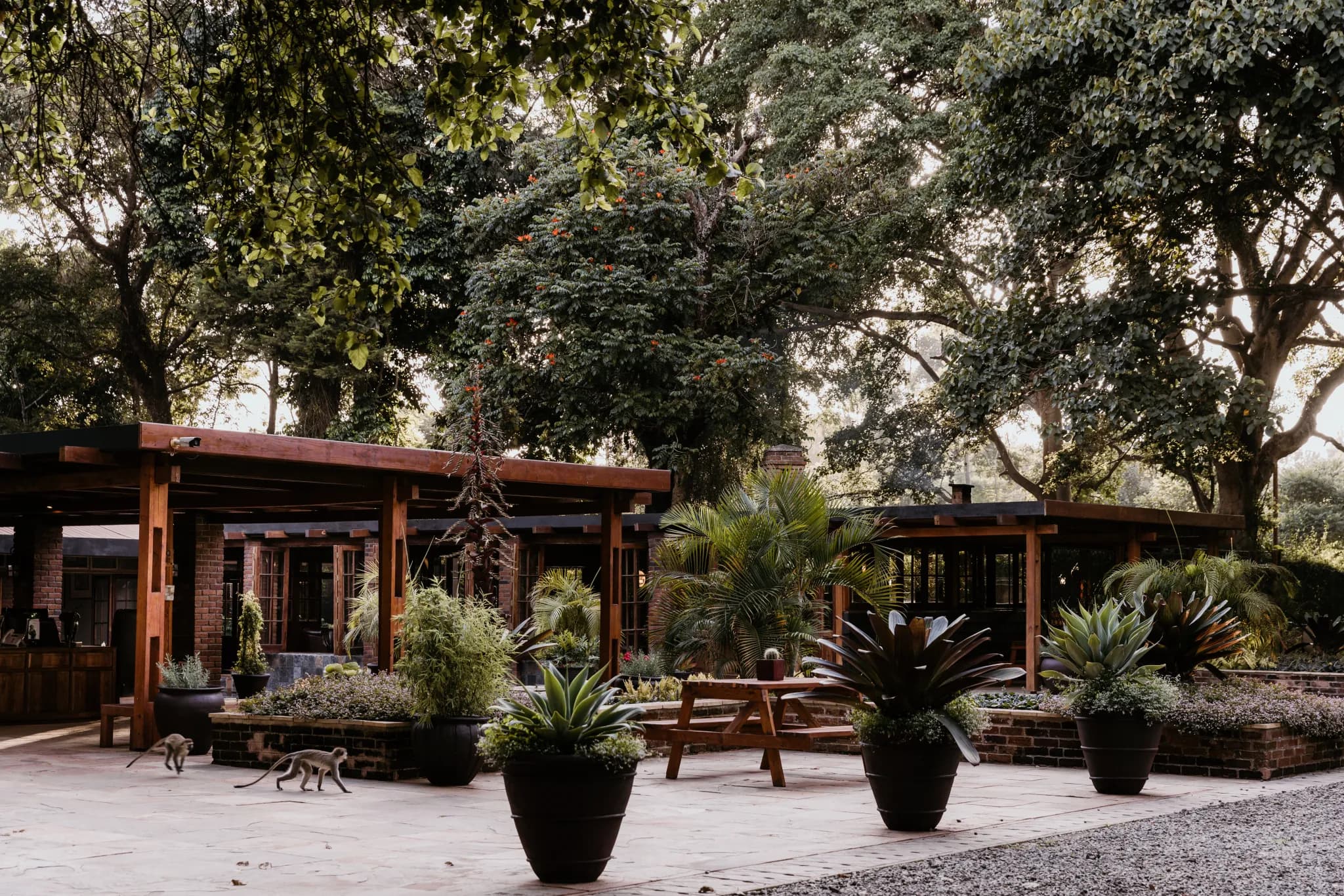 The leafy plantation grounds at Arusha Coffee Lodge, low buildings dissolving into the greenery — Photo: Elewana Collection
The arithmetic of the place is its great practical virtue. Arusha's own airport is ten minutes away; Kilimanjaro International, where most international flights land, about an hour and a half. Close enough that the transfer is never a chore — far enough that the city's noise never reaches you. You stay in Plantation Rooms scattered through the gardens, or the larger Plantation Suite, and the loudest thing you hear is birdsong.
The Plantation
Walk the grounds and the conceit becomes literal: the coffee is real. The plantation is not a decorative gesture but a producing one, its rows of glossy-leaved bushes threaded with paths that lead between the rooms, the spa and the restaurants. Mornings here are for slow circuits under the shade trees, coffee in hand, before the day asks anything of you.
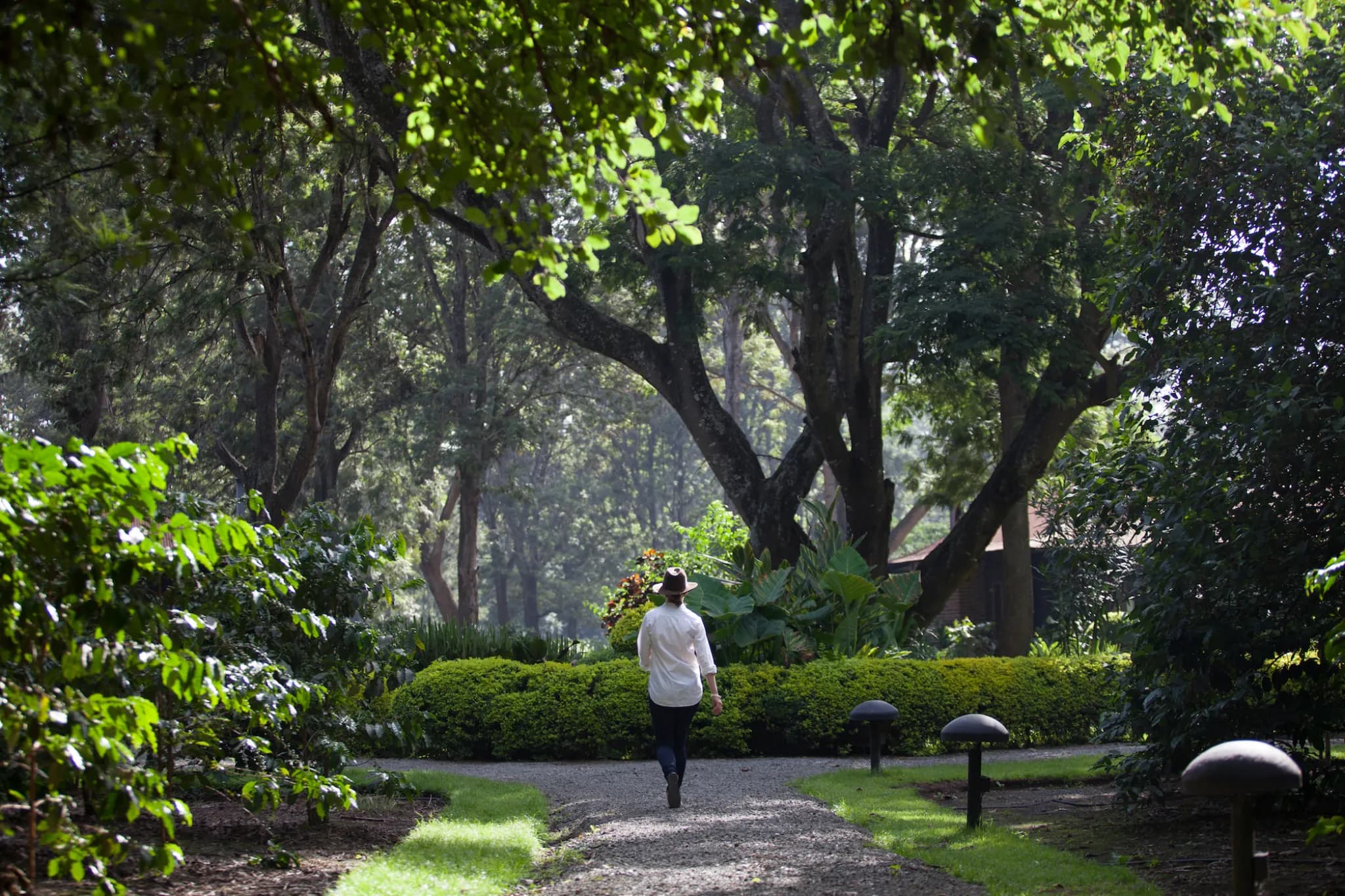 A garden path through the shade trees and coffee bushes of the plantation — Photo: Elewana Collection
There is a swimming pool, a spa called Peaberries — the name itself a coffee pun, after the single round bean that sometimes grows where two should — and, for restless guests, quad biking, birding and day trips to nearby Arusha National Park. But the gardens are the main event, and the right way to use them is to do very little in them.
The Coffee
The signature experience is also the simplest: the tree-to-cup tour, in which the plantation's own crop is followed from the branch through every stage to the finished pour. You watch the cherries picked by hand, learn how they are pulped, fermented, dried and sorted, and end where all good coffee stories end — with a cup, on the plantation that grew it.
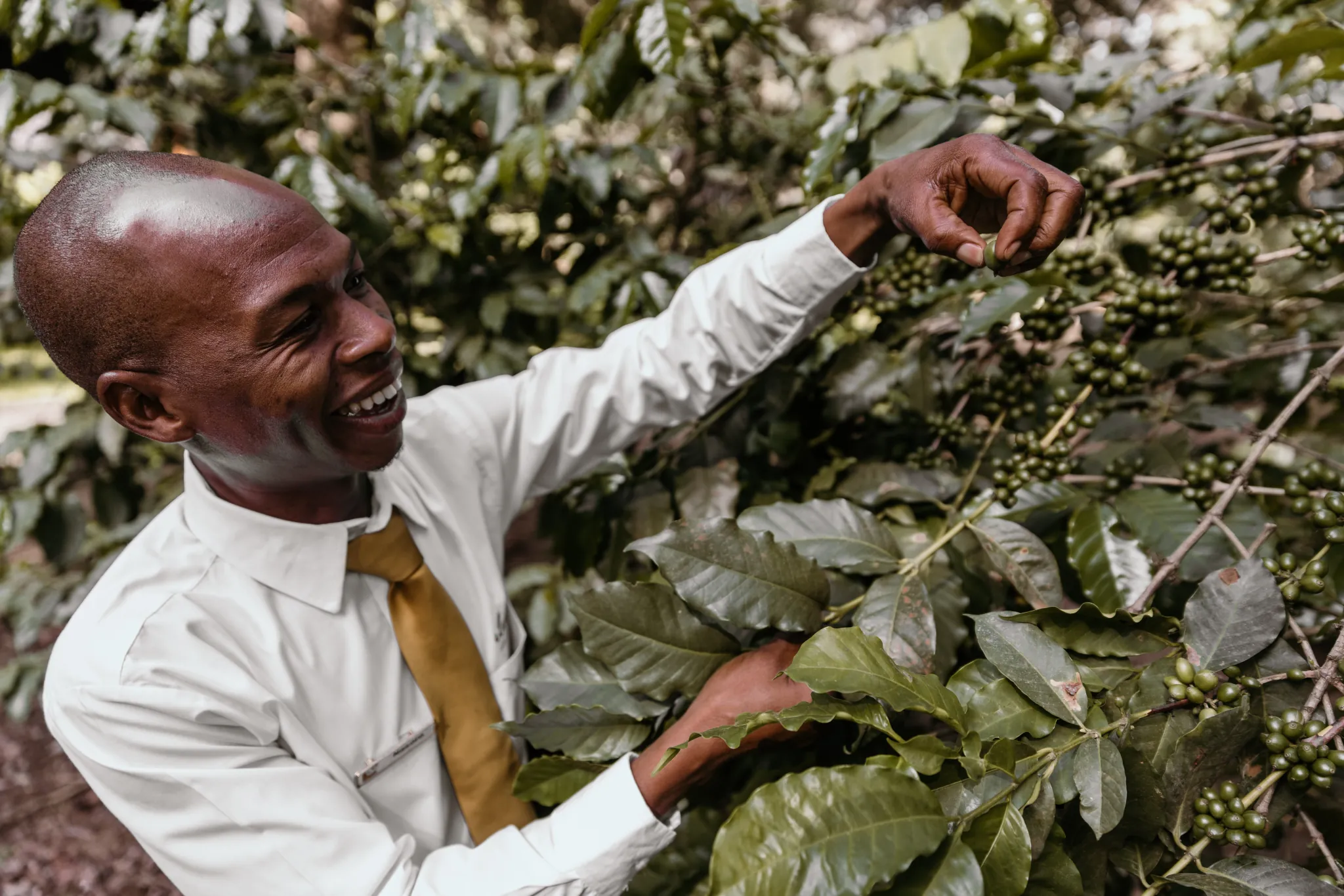 A plantation worker picking ripe coffee cherries by hand on the tree-to-cup tour — Photo: Elewana Collection
It is a small education in patience. The bean that takes an instant to drink takes the better part of a year to grow and a careful sequence of human hands to render drinkable. Roasted, the cherries become the dark, oiled beans that fragrance the morning.
 Roasted coffee beans, the end of the tree-to-cup story — Photo: Elewana Collection
For those who would rather end the day than begin it, the gardens are at their best as the light goes amber — the plantation's own version of the bush sundowner, a drink among the shade trees with the day's drive behind you.
Shanga
The lodge's quiet conscience is Shanga, a social enterprise on the property where Tanzanians with disabilities craft jewellery, glassware and textiles, much of it from recycled materials — old bottles melted down and reblown into new glass.
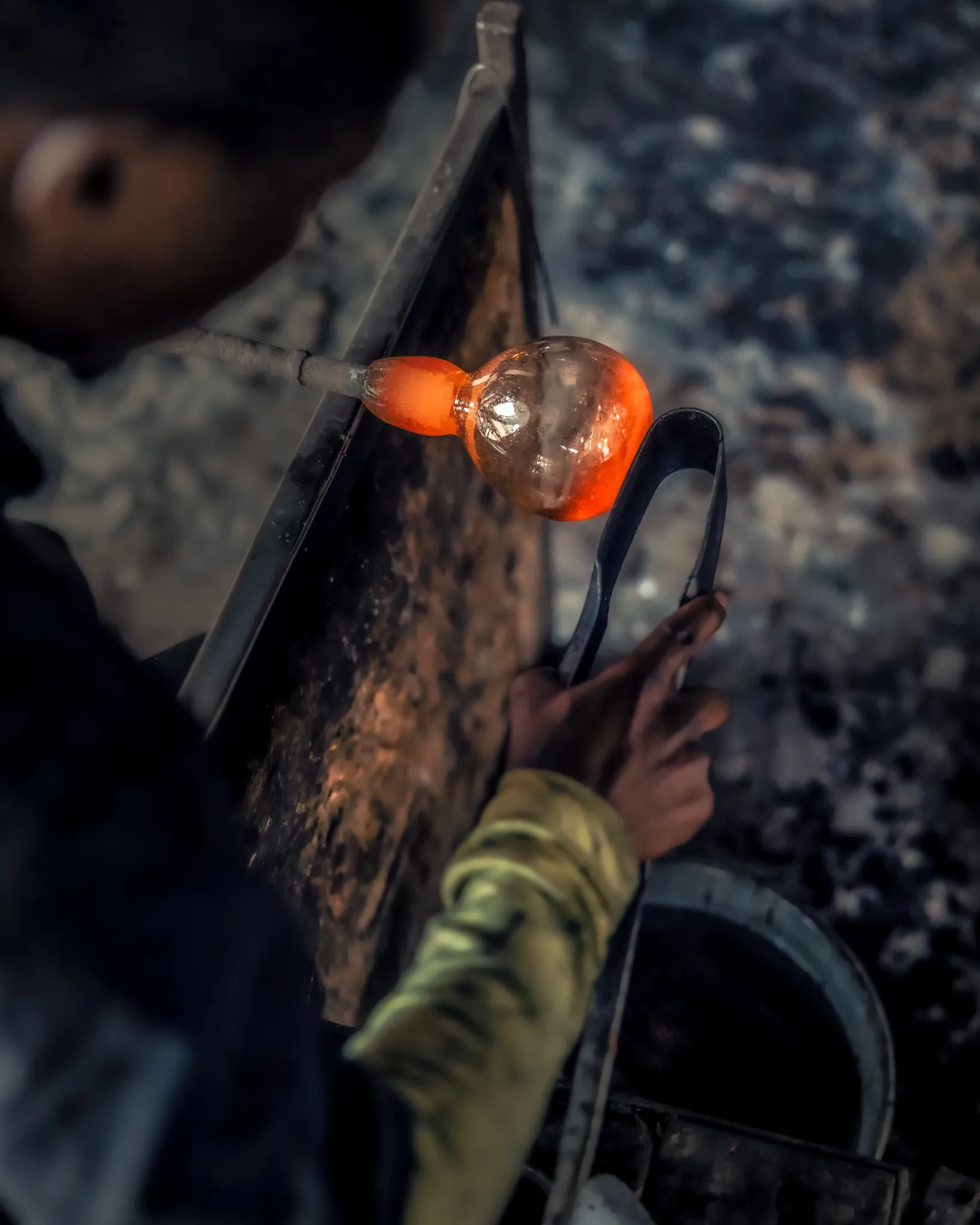 A Shanga craftsman shaping molten glass from recycled bottles at the furnace — Photo: Elewana Collection
You can watch the glassblowers work the furnace, the weavers at their looms, the beadwork taking shape, and the effect is the opposite of a curio shop: this is making, in plain sight, by people for whom the work is dignity as much as livelihood. The recycled glass returns as beads, tumblers and strings of small elephants and stars.
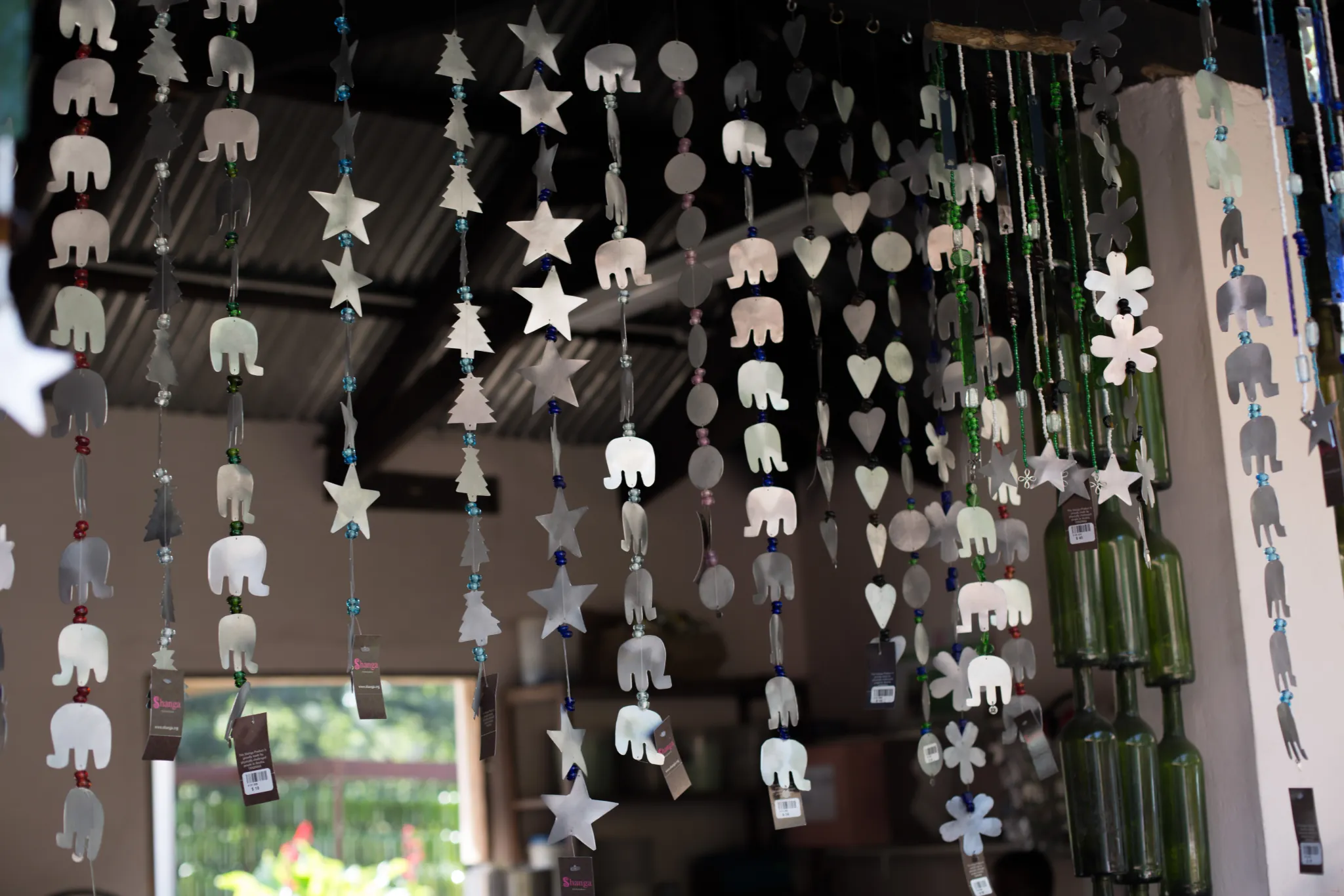 Recycled-glass and beaded ornaments on display at the Shanga workshop — Photo: Elewana Collection
It is the kind of thing a gateway lodge could easily skip and instead has made central. Buying a piece here is among the more honest souvenirs a Tanzanian trip will offer.
Traders Walk
A short stroll from the rooms, Traders Walk gathers five boutiques under one roof — the gift-and-gather end of the property, useful for filling the gap between safari and flight. The headline tenant is a Tanzanite jeweller, and there is good reason for its prominence: tanzanite is mined in this region around Arusha. Buying it at its source has a logic that buying it anywhere else does not.
 Tanzanite gemstones on a jeweller's scale at the Traders Walk boutique — Photo: Elewana Collection
The blue-violet stone, weighed and loupe-examined on the spot, is the regional speciality — a souvenir that is also a small piece of the mountain you may have just climbed or are about to.
The Road North
By the time you leave, the gateway night has done its quiet work. The bag is repacked, the coffee is in your system, and the road north — to the calving plains of the southern Serengeti, the rim of the Ngorongoro Crater, the baobabs of Tarangire — feels less like a departure than a continuation.
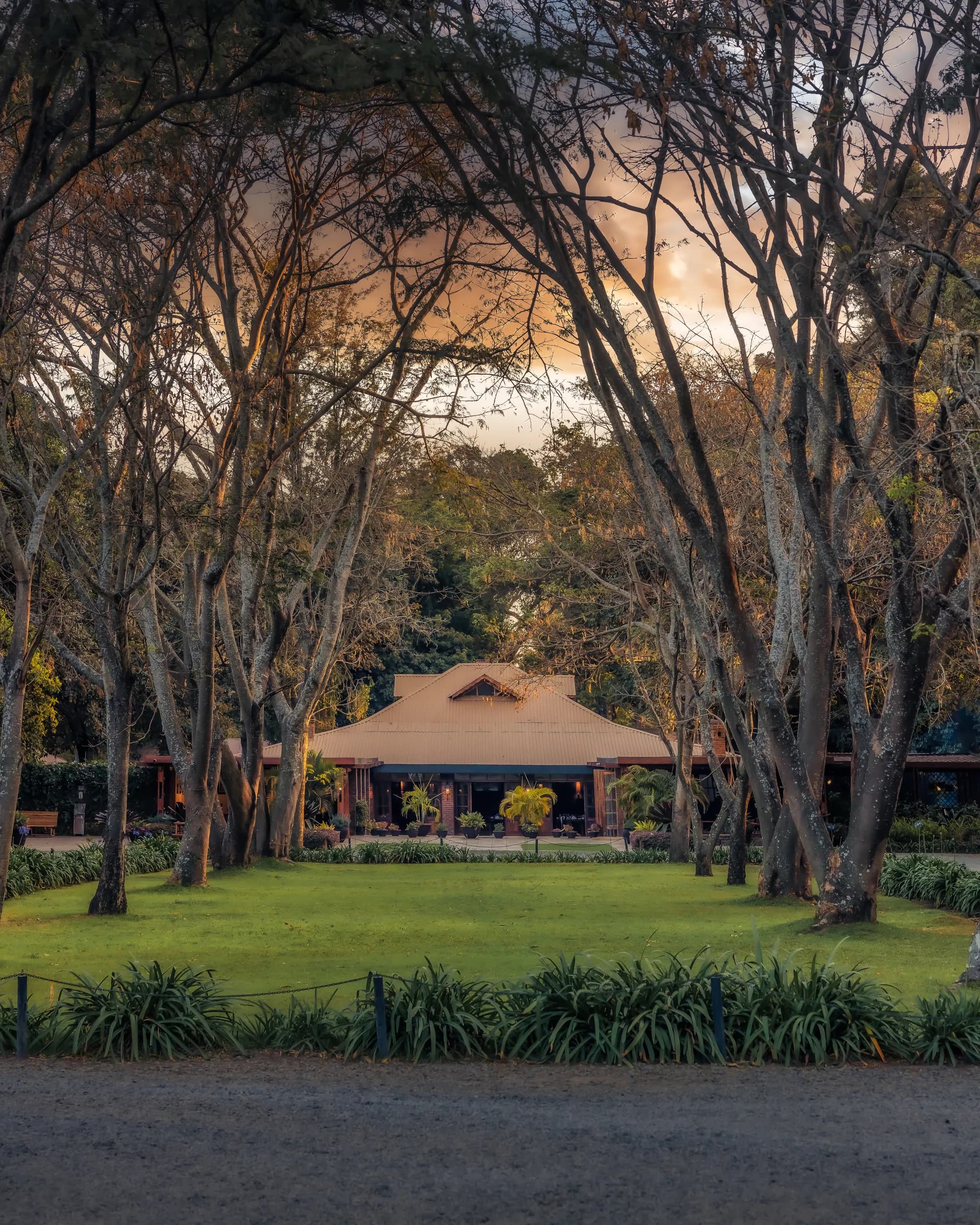 The lodge at dusk, framed by the old shade trees of the plantation — Photo: Elewana Collection
That is the art of it. A good gateway lodge does not compete with the safari; it frames it. Arusha Coffee Lodge bookends the journey with green calm at both ends, and in between sends you out a little more rested than you arrived.
Getting Here: Arusha Coffee Lodge is a ten-minute drive from Arusha's own airport and about an hour and a half from Kilimanjaro International, where most international flights land. It is the natural first and last night for the northern circuit — Serengeti, Ngorongoro and Tarangire — and the standard launchpad for Kilimanjaro climbs.
When to Visit: As a year-round gateway the lodge works in any season; time your safari instead. The southern Serengeti calving runs January to March; the herds then move up through the central and western Serengeti from roughly April to June, reach the northern Serengeti and its Mara River crossings around July to October, and drift south again late in the year. Tarangire's elephant concentrations peak in the dry season.
Afrilux9 Verdict: Arusha Coffee Lodge understands a thing most gateway hotels do not — that the transitional night is not dead time but part of the journey, and worth designing with care. A working plantation, a tree-to-cup tour that is genuinely its own, the unforced decency of Shanga, and a tanzanite shop standing where the stone actually comes from: none of it is filler. It is the green threshold to the northern parks, and the rare arrival-and-departure lodge that earns its place in the itinerary rather than merely occupying it.
Imagery and property information courtesy of The Elewana Collection (@elewanacollection), which retains all rights.
Cover photograph: Elewana Collection
Part of our guide to Tanzania's Northern Circuit.
More from Tanzania's Northern Circuit
Three Camps, One Migration: Reading the Serengeti by Season
8 min readThe Private Serengeti: Inside Singita Grumeti's 350,000-Acre Kingdom
5 min readThe Silent Serengeti: A Masterclass in Private Expeditions
3 min readA Room in the Baobabs: Tarangire Treetops and the Elephant Capital
7 min readCape-Dutch in the Crater Highlands: The Manor at Ngorongoro
6 min readThe Gateway Ritual: Gran Meliá Arusha and the Road to the Serengeti
6 min read
Inspired by This Journey?
Search flights and hotels to start planning your own African escape.
Begin Your Journey