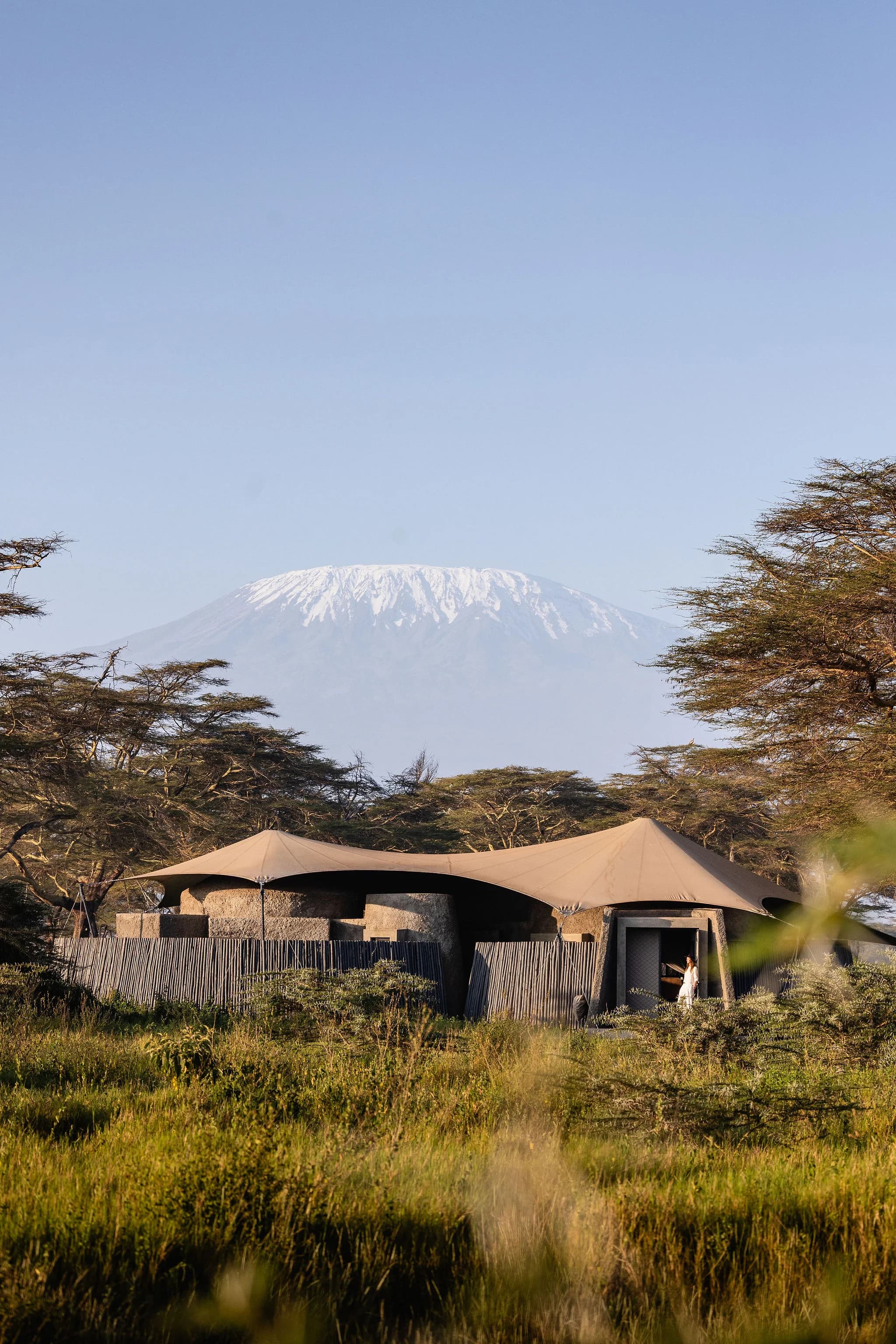
In the Shadow of the Mountain: Angama Amboseli and Kenya's Most Iconic View
Kilimanjaro is not a subtle presence. At 5,895 metres, the highest point on the African continent rises out of the surrounding plains with a finality that makes every other landmark in the region feel provisional. Most people see it from below, from the Amboseli basin, framed by elephants in the foreground and dust in the air. Angama chose a different vantage point.
Angama Amboseli sits at 1,400 metres on the edge of the Kimana Sanctuary — high enough that the mountain fills the sky rather than the horizon, and quiet enough that the sanctuary's ecosystem has had room to recover into something extraordinary. This is not the crowded Amboseli National Park. It is its quieter, wilder neighbour — and Angama is the reason to come here.
The Setting
The Kimana Sanctuary is a 6,000-acre community-owned conservancy that sits between Amboseli National Park and the Chyulu Hills. It operates under the same model as Angama's Mara properties: the Maasai community holds the land, holds equity in the lodge, and fills the roles within it.
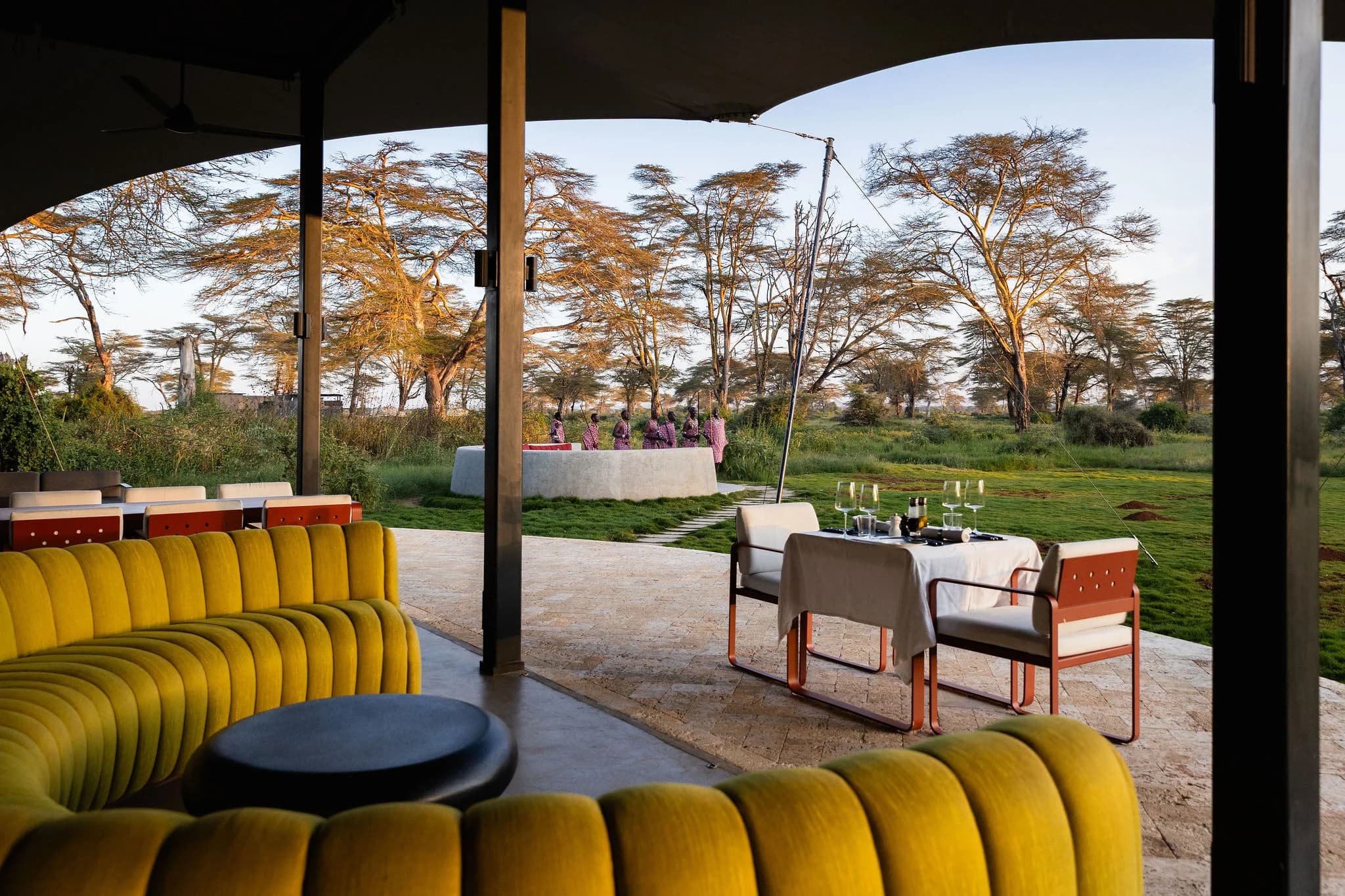 The main area at Angama Amboseli, with Kilimanjaro at dawn — Photo: Angama / Teagan Cunniffe
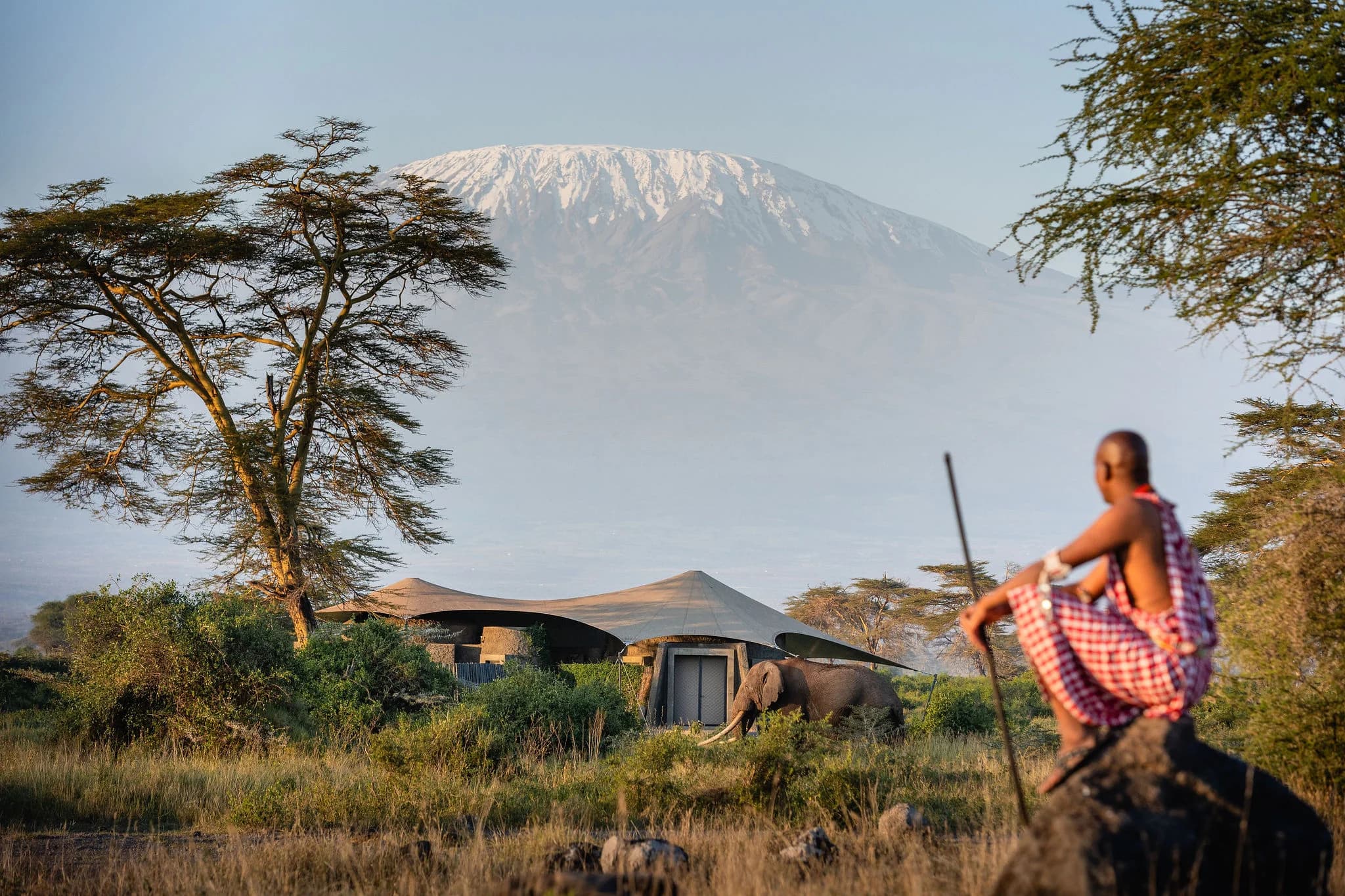
Elephants moving across the Kimana Sanctuary with Kilimanjaro beyond — Photo: Angama / Teagan Cunniffe
What the sanctuary offers that the national park does not is solitude. There are no day-visitor vehicles in Kimana. No park gate queues. No radio-coordinated convoys at a lion sighting. The wildlife here — elephant, buffalo, lion, leopard, giraffe, and the largest concentration of free-ranging Maasai giraffe in the region — moves through a landscape managed for its health rather than its visitor throughput.
The result is a quality of encounter that the main park, despite its drama, rarely achieves.
The Suite
The suites at Angama Amboseli were designed around one question: where do you position a bed so that the last thing you see at night and the first thing you see at dawn is Kilimanjaro?
 View of Kilimanjaro from a suite at Angama Amboseli — Photo: Angama / Teagan Cunniffe
The answer — at the precise angle and elevation where the mountain fills the full width of the glass — required both architectural precision and a site that most lodge developers would have considered too elevated, too remote, and too far from the main park road. Angama considered it the only logical place to build.
The suites are warm where the Mara suites are dramatic. Dark timber, layered textiles, the kind of interior that invites you to stay rather than simply to look. The private deck is oriented, inevitably, toward the mountain — and the mountain, when the summit is clear of cloud in the early morning, is among the most arresting sights in Africa.
The Mnara
Every great lodge has an architectural gesture — one element that declares its relationship to the landscape. At Angama Mara it is the Out of Africa Lookout. At Angama Amboseli it is the Mnara.
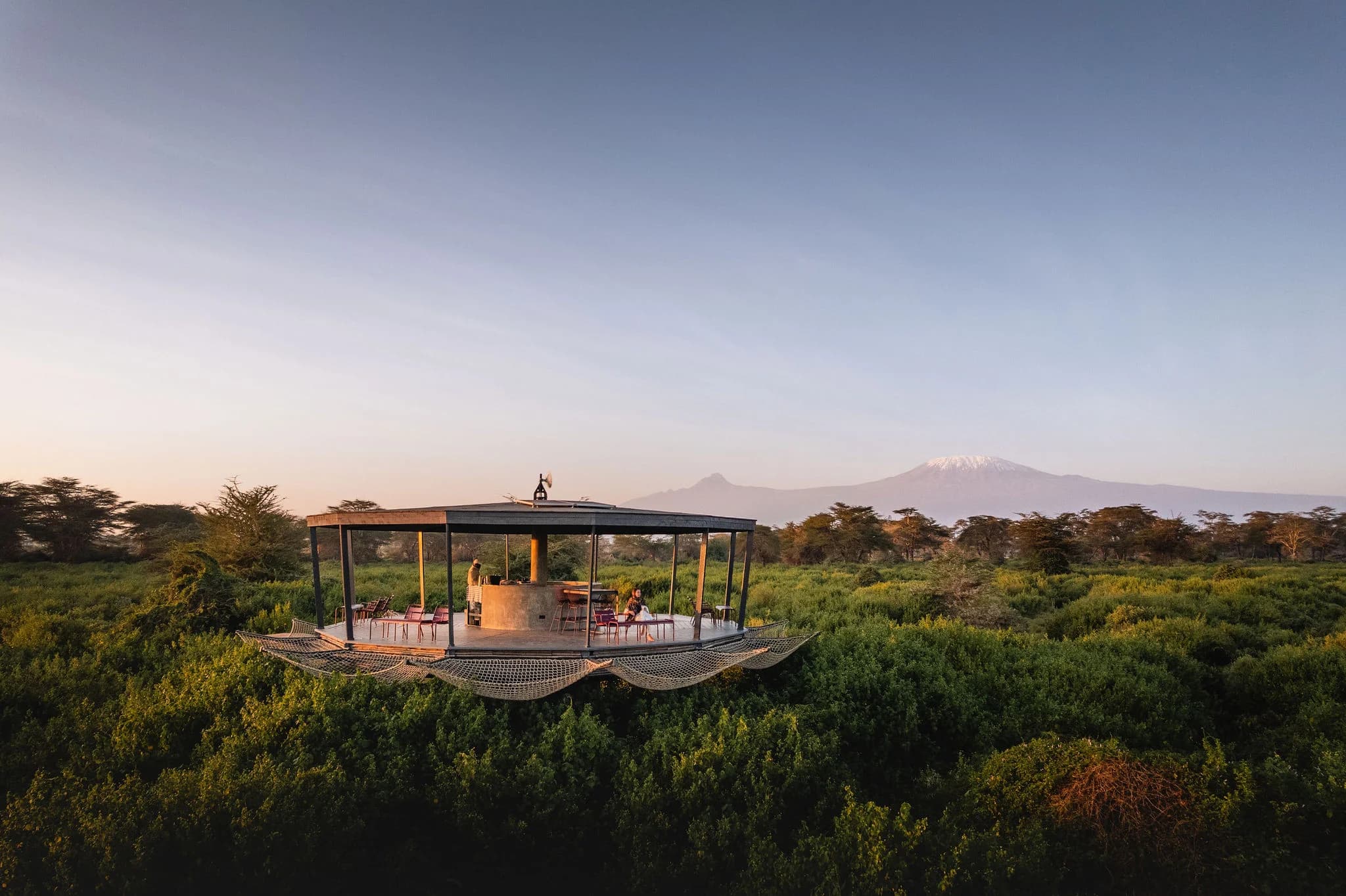 The Mnara tower at Angama Amboseli — Photo: Angama / Teagan Cunniffe
The Mnara (Swahili for tower) rises above the lodge and offers a 360-degree view of the sanctuary, the Chyulu Hills to the east, and Kilimanjaro to the north. At dawn, when the mountain is clear and the sanctuary floor is still in shadow, the view from the Mnara is one of the finest elevated vantages in East Africa. It is also, late in the afternoon with a glass in hand, one of the most peaceful.
Game Drives
The Kimana Sanctuary's wildlife is its own argument. Elephants from the Amboseli population — among the largest-tusked in Africa — move through the sanctuary on their ancient routes between the swamps and the high slopes of Kilimanjaro.
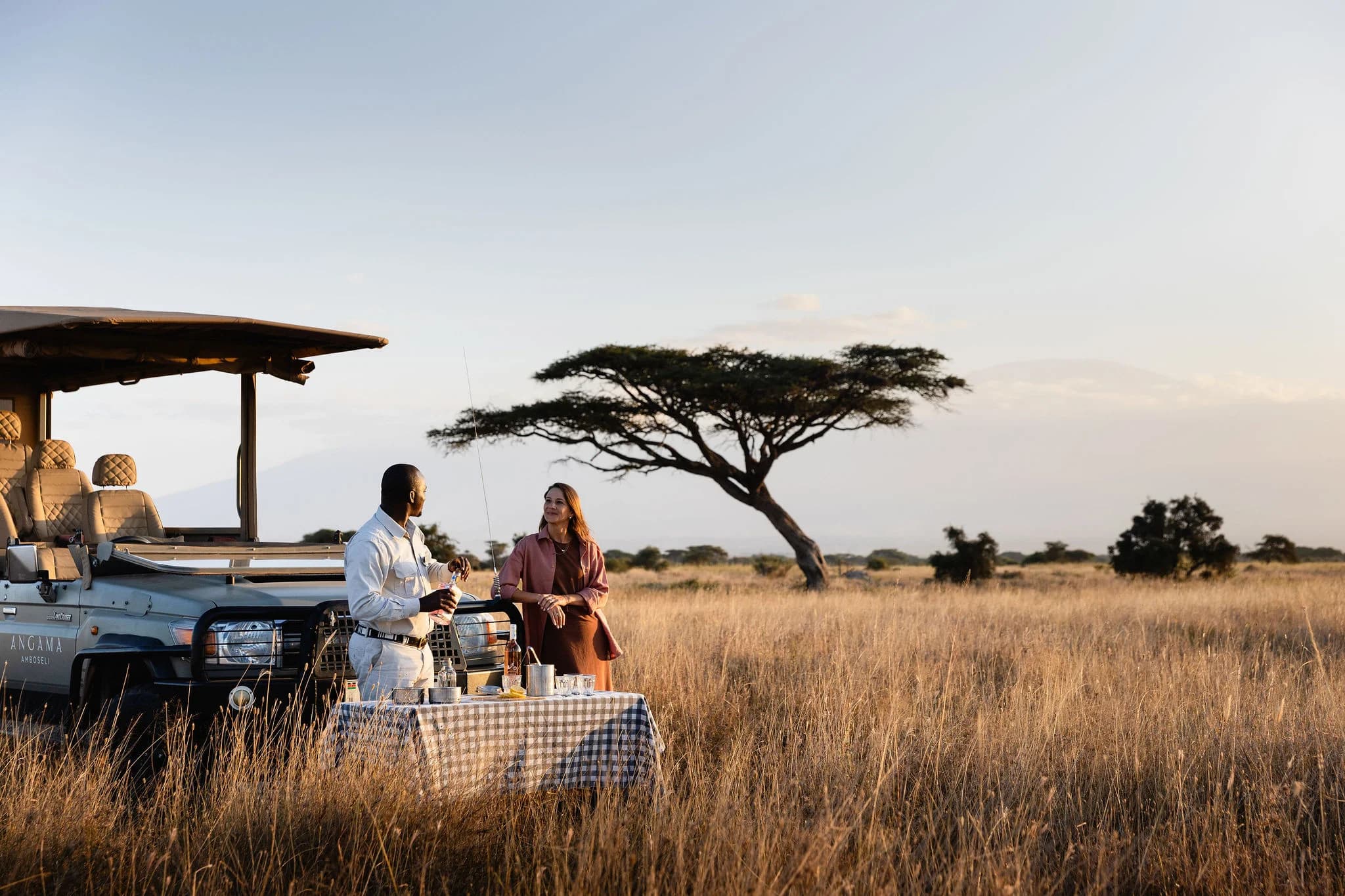 Game drive in the Kimana Sanctuary — Photo: Angama / Teagan Cunniffe
Driving through the sanctuary with Kilimanjaro as backdrop is an experience that photographs record accurately but incompletely. The scale of it — the mountain, the plains, the herds — is one of those things that the eye processes differently than the lens. No image quite contains the proportion of sky to summit to grassland that the human visual field takes in at once.
Angama's guides are Maasai, deeply familiar with the sanctuary's rhythms, and skilled at reading animal behaviour in ways that take years to develop. The quality of interpretation — what the elephant posture means, what the buffalo herd's movement indicates, where the lion pride is likely to be at this hour — elevates every drive from observation to understanding.
The Maasai Thread
Unlike some lodges where cultural programming sits adjacent to the safari experience, at Angama Amboseli the Maasai presence is structural. The community's land surrounds the lodge. Their cattle share the ecosystem with the wildlife. Their knowledge of the sanctuary is the knowledge the guides draw on.
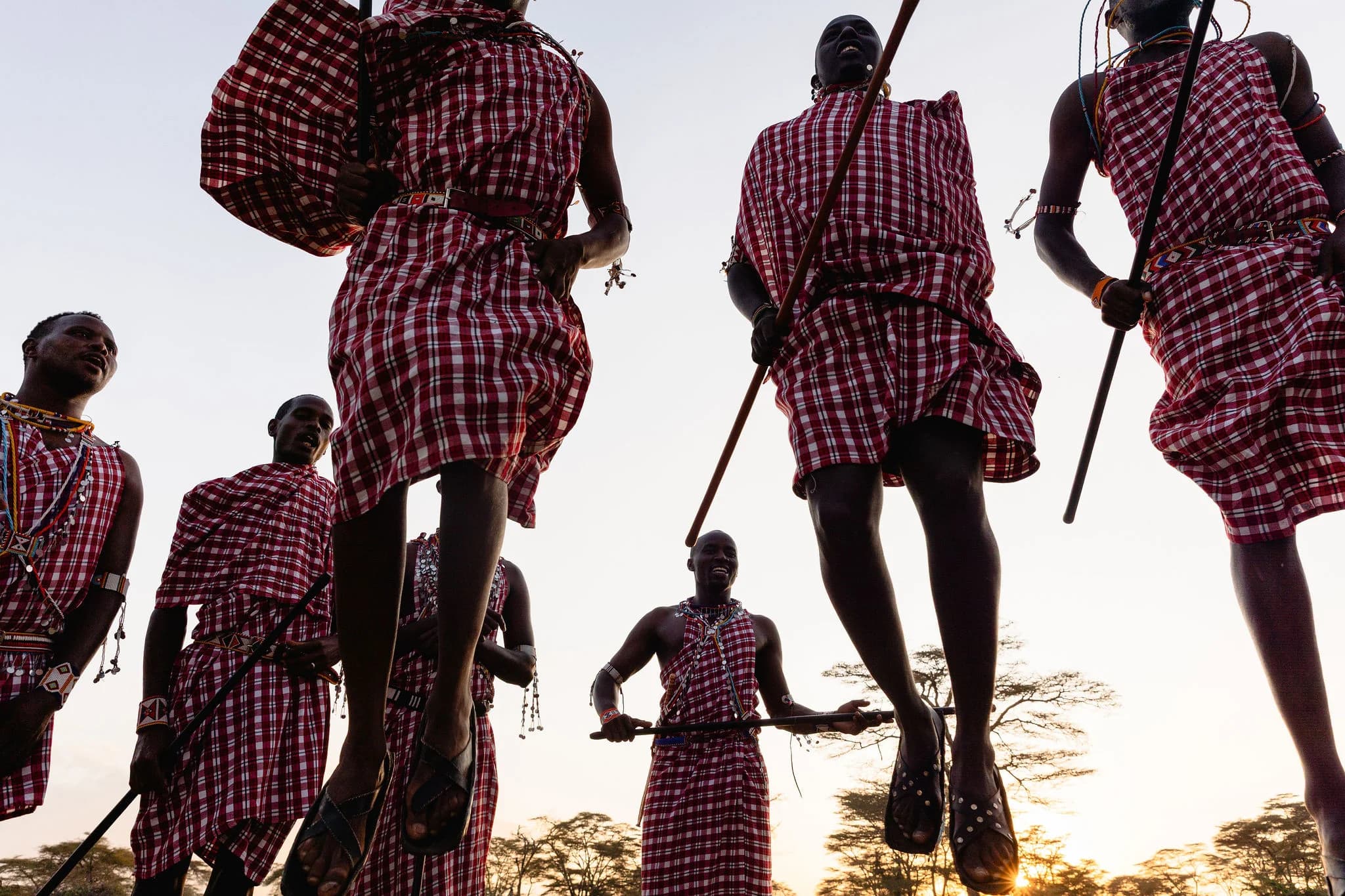 Maasai culture at Angama Amboseli — Photo: Angama / Teagan Cunniffe
Evenings at the lodge move at a pace determined by this context: sundowners in the field, a return through the sanctuary as the light fails, dinner under the mountain. The Maasai staff bring to each interaction a quality of presence that no training programme produces — they are on their land, they understand it deeply, and they are choosing to share it.
The Pool
The pool at Angama Amboseli sits at the edge of the property with the sanctuary floor below and Kilimanjaro above.
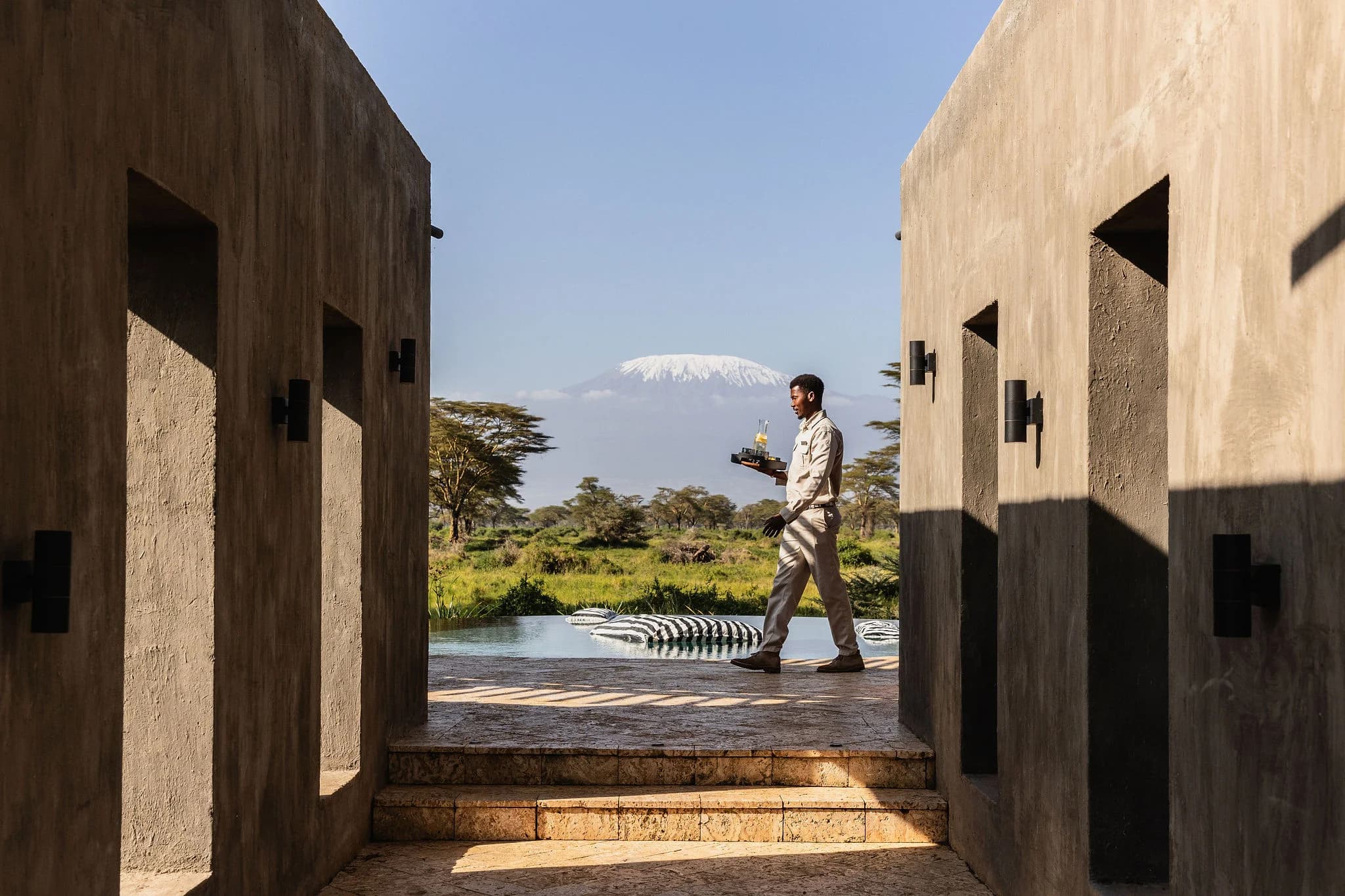 The pool at Angama Amboseli, with Kilimanjaro in the distance — Photo: Angama / Teagan Cunniffe
The pool at Angama Amboseli framing Kilimanjaro — Photo: Angama / Teagan Cunniffe
The geometry is simple: water, plains, mountain. In the late afternoon, when the light on the summit turns from white to gold to rose, it is the kind of view that makes the idea of returning to a room feel premature.
Getting Here: Angama Amboseli is accessed by charter flight from Nairobi Wilson Airport to Kimana Airstrip, approximately 45 minutes. International arrivals connect through Nairobi Jomo Kenyatta. The lodge can also arrange road transfers for guests combining Amboseli with Tsavo.
When to Visit: The Kimana Sanctuary holds exceptional wildlife year-round. The dry seasons — January to March and July to October — offer the clearest views of Kilimanjaro and the highest game concentrations around permanent water sources. The short rains (November) bring dramatic skies and, on clear mornings, snow on the summit.
Afrilux9 Verdict: Angama Amboseli makes the case that the finest African safari is not about the drama of a single encounter but about the sustained quality of a whole ecosystem, experienced slowly and in full. The Kimana Sanctuary is quieter than the main park, more intimate than any concession in the Mara, and framed by a mountain that most lodges can only claim as a distant backdrop. Here it is the centrepiece — and Angama has designed every room, every deck, and every drive to make you feel that.
Cover photograph: Angama / Teagan Cunniffe
Part of our guide to Amboseli & Kilimanjaro.
More from Amboseli & Kilimanjaro
Inspired by This Journey?
Search flights and hotels to start planning your own African escape.
Begin Your Journey