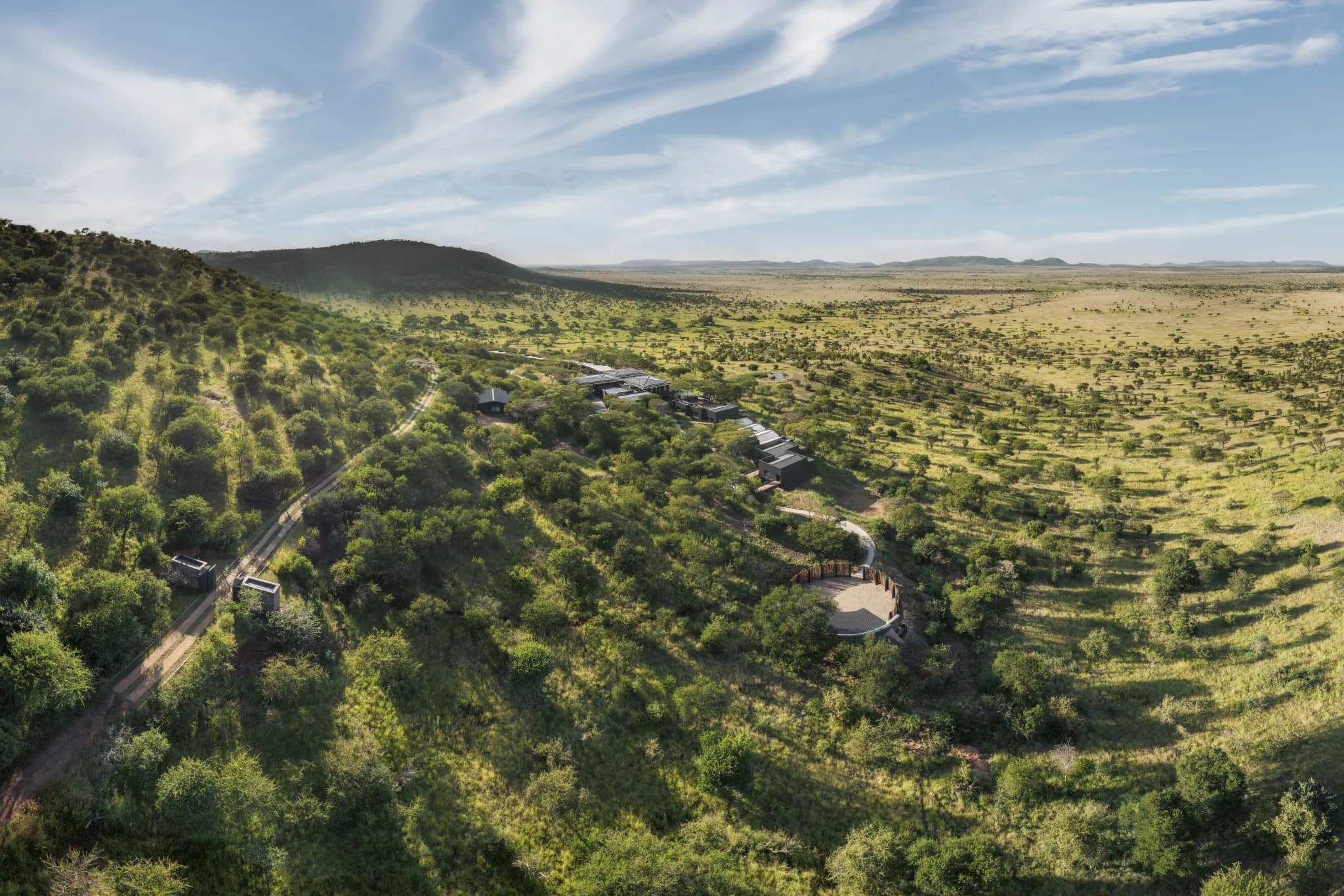
The Heartland of Safari
If there is a single landscape that the word safari conjures, it is this one. The Northern Circuit of Tanzania gathers, within a few hundred kilometres of one another, the most storied wildlife destinations on the continent: the endless plains of the Serengeti, across which two million wildebeest move in the greatest terrestrial migration on Earth; the Ngorongoro Crater, a collapsed volcanic caldera so dense with life it is often called the eighth wonder of the world; and Tarangire, whose dry-season river draws one of Africa's great concentrations of elephant. Together they form a circuit that has defined the safari imagination for a century.
What distinguishes the Northern Circuit is not any single spectacle but the completeness of it. In one unhurried journey, a traveller can witness the calving of the herds on the southern grasslands, descend into a crater teeming with lion and black rhino, sleep among ancient baobabs on an elephant migration route, and begin and end it all in the green highland city of Arusha. The distances are short, the airstrips frequent, and the standard of lodge and camp among the highest in Africa.
Reading the Migration by Season
The Great Migration is not an event but a perpetual circuit, and understanding its rhythm is the key to timing a Serengeti safari. The herds move clockwise through the ecosystem across the year, and where you should sleep depends entirely on where they are. From January through March, the wildebeest gather on the short-grass plains of the southern Serengeti to calve — some four hundred thousand calves born in a matter of weeks, an evolutionary spectacle of safety in numbers that draws every predator on the plains.
Through April and May the herds drift west and north; by the dry months of July through October the drama concentrates on the river crossings, where columns of wildebeest brave the crocodile-filled waters of the Grumeti and the Mara. By December the herds turn south again, completing the loop. The practical lesson is simple: a stay positioned for the calving in the south is a different journey from one positioned for the crossings in the north, and the finest itineraries are built around the calendar rather than against it.
The Parks of the Circuit
The Serengeti is the centrepiece — fourteen thousand square kilometres of plains, kopjes and riverine forest holding the full cast of African wildlife, from the migration herds to lion, leopard, cheetah and black rhino. Its southern reaches near the Moru Kopjes hold ancient Maasai rock art and the calving grounds; its central and northern stretches follow the herds toward the rivers.
The Ngorongoro Crater, an hour's drive from its highland rim, is a self-contained Eden — its caldera floor sustaining one of the highest densities of wildlife in Africa, including the elusive black rhino, within walls that rise six hundred metres on every side. Tarangire, to the southeast, is the elephant park: over three thousand of them gather around its river in the dry season, moving among the giant baobabs that define the landscape. And beyond the marquee parks lie Lake Manyara, with its tree-climbing lions and flamingo-pink soda lake, and Olduvai Gorge, where the earliest chapters of human history were unearthed.
Where to Stay
The circuit rewards a considered choice of base in each region. In the Serengeti, the camps are best chosen by season: Serengeti Pioneer Camp, on its own kopje in the south, is positioned for the calving; Serengeti Migration Camp, its twenty elevated tents lining the Grumeti River, sits on the migration route within reach of the crossings; and Serengeti Explorer, high on the Nyaboro Hills with a thirty-five-metre infinity pool and a semi-submerged photographic hide, offers an elevated amphitheatre onto the plains. Which of the three you choose is finally a question of when you come, and we read the year camp by camp in Three Camps, One Migration.
Elsewhere on the circuit, the character shifts with the landscape. Tarangire Treetops raises its rooms onto elevated platforms among the baobabs — a luxury treehouse alone in a vast private wildlife area. The Manor at Ngorongoro is something else entirely: an old-world Cape-Dutch country estate set among a working coffee plantation in the green crater highlands. And in Arusha — the gateway to it all — Arusha Coffee Lodge sits within a working plantation on the city's edge, the ideal first and last night of any northern journey.
Two further ways to have the Serengeti sit outside the classic camps altogether. Singita Grumeti holds 350,000 acres of the western ecosystem under conservation management, a private reserve at a scale that changes what a game drive is. And a private expedition through the circuit trades fixed addresses for a route of your own, built around the quiet hours rather than the convoy.
Arusha: The Threshold
Every northern safari begins and ends in Arusha, the highland city at the foot of Mount Meru that has served as the departure point for East African expeditions for over a century. It is more than a transit stop. The day spent here — decompressing before the bush, or savouring the journey's end afterward — sets the frame for everything around it, and the finest gateway lodges treat it as an experience in its own right.
On a working coffee plantation at the city's edge, guests can follow the bean from tree to cup, browse the Tanzanite ateliers of Traders Walk, and visit Shanga — a remarkable social enterprise where Tanzanians with disabilities craft jewellery and glassware from recycled materials. It is a gentle, grounding introduction to the country, and a reminder that the journey north is as much about its people as its wildlife. For a different register of threshold, Gran Meliá Arusha makes the same case in a contemporary key, and carries it onward with a lodge of its own out on the plains.
Practical Considerations
GETTING THERE
The circuit is served by Kilimanjaro International Airport, with strong connections via Nairobi, Addis Ababa and Doha; Arusha Airport handles the light-aircraft network into the parks. From Arusha, the Serengeti airstrips are roughly an hour by air, the Ngorongoro highlands a half-hour flight or a scenic three-to-four-hour drive, and Tarangire a short hop. Most journeys combine a road leg through the highlands with light-aircraft transfers between the more distant camps.
IDEAL DURATION
We recommend seven to ten nights to do the circuit justice — typically a night or two in Arusha, three to four in the Serengeti positioned for the season, a night or two at the Ngorongoro highlands, and time in Tarangire for the elephants. Those with less time can focus on the Serengeti and Ngorongoro alone; those with more can extend to Lake Manyara or onward to Zanzibar for a coastal finish.
WHAT TO PACK
Neutral-toned layers for game drives, with a warm fleece for the cool mornings of the highlands and the open-sided vehicles. The Ngorongoro rim is genuinely cold at altitude. Binoculars and a zoom lens are essential, particularly for the photographic opportunities of the migration. Most luxury camps provide laundry, so pack light.
Activities & Excursions
The Northern Circuit offers a breadth of experience few destinations can match — from the aerial to the archaeological, the wild to the cultural.
HOT-AIR BALLOON SAFARI
At dawn over the Serengeti, a balloon lifts silently above the plains as the herds move below — the scale of the ecosystem revealing itself in a way no game drive can. Most flights conclude with a champagne breakfast set out on the open grassland.
NGORONGORO CRATER DESCENT
A full-day game drive descends to the crater floor, where lion, elephant, buffalo, flamingo and the rare black rhino concentrate within a single enclosed ecosystem. A private picnic on the floor, away from the crowds, is the way to experience it well.
GUIDED BUSH WALKS
Where permitted — notably from the Serengeti camps and along the Grumeti River — walking safaris led by armed guides reveal the smaller dramas of the bush: tracks, birdsong, resident hippo, and the medicinal plants the Maasai have used for generations.
RHINO TRACKING & THE PHOTO HIDE
In the Moru Kopjes of the southern Serengeti, half-day excursions track black rhino on foot. For photographers, the semi-submerged hide at Serengeti Explorer offers eye-level encounters with wildlife at the waterhole — a rare and rewarding vantage.
COFFEE, CULTURE & OLDUVAI
Beyond the wildlife: a coffee-plantation tour from tree to cup in Arusha or the Ngorongoro highlands, a visit to the Shanga social enterprise, and an excursion to Olduvai Gorge, where the Leakeys unearthed some of the earliest evidence of human origins.
Further Reading
The camps and lodges of the circuit in full, and the planning pieces that sit behind the advice above.
Three Camps, One Migration: Reading the Serengeti by Season
The Serengeti is not a place so much as a clock — the great herds moving in a slow circle through the year. Elewana keeps three camps along that circle, each one holding a different chapter of the journey, so that where you stay becomes a question of when you come.
8 min readThe Private Serengeti: Inside Singita Grumeti's 350,000-Acre Kingdom
Where conservation rewrites the rules of safari. From Sasakwa's hilltop manor to Sabora's canvas walls, Singita Grumeti offers the Serengeti on an entirely different scale.
5 min readThe Silent Serengeti: A Masterclass in Private Expeditions
Beyond the dust and the crowds lies a different Tanzania. A journey through the Ngorongoro and the endless plains, where luxury is measured in silence and local wisdom.
3 min readA Room in the Baobabs: Tarangire Treetops and the Elephant Capital
Rooms raised on platforms among baobab and marula, a luxury treehouse alone in 312 square kilometres of private wilderness, on a path the elephants have walked for longer than anyone can say.
7 min readCape-Dutch in the Crater Highlands: The Manor at Ngorongoro
An old-world country estate of gabled white walls and clipped lawns sits in the green Ngorongoro highlands, on a working coffee plantation — manor-house grandeur as the threshold to the eighth wonder of the world.
6 min readFrom Tree to Cup: Arusha Coffee Lodge and the Art of the Gateway Night
On the edge of Arusha, inside a working coffee plantation, the last comfortable bed before the northern parks turns the obligatory gateway night into something worth slowing down for.
7 min readThe Gateway Ritual: Gran Meliá Arusha and the Road to the Serengeti
Before every great safari there is a city, a night, a moment of transition. In Arusha, Gran Meliá has built the finest possible threshold — and in the Serengeti, its lodge delivers the plains without compromise.
6 min read
Ready to Follow the Migration?
Begin planning your Northern Circuit — timed to the migration, balanced across the Serengeti, Ngorongoro and Tarangire, and bookended by the gateway calm of Arusha. Let our guides shape the route, then search flights and stays to bring it within reach.
Begin Your JourneyProperty information for the three Elewana Serengeti camps, Tarangire Treetops, The Manor at Ngorongoro and Arusha Coffee Lodge courtesy of The Elewana Collection (@elewanacollection), which retains all rights.