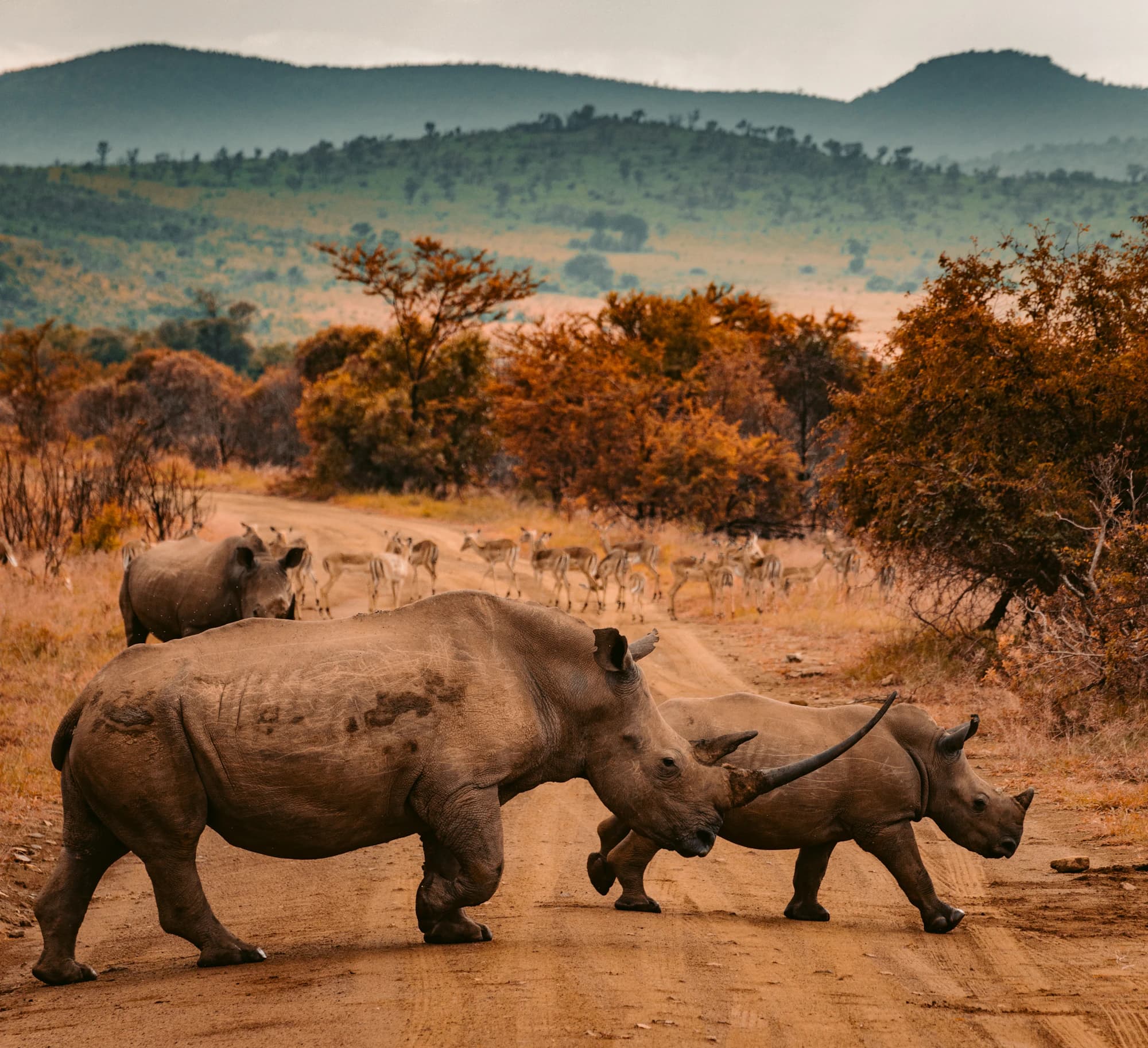
An Ecosystem Without Equal
The Masai Mara is not merely a game reserve — it is a living theatre of the wild, a vast expanse of rolling grasslands, acacia-dotted ridgelines, and winding rivers that together compose one of the most extraordinary ecosystems on Earth. Spanning roughly 1,510 square kilometres in southwestern Kenya, the Mara forms the northern continuation of Tanzania's Serengeti plains, creating a borderless corridor through which over two million wildebeest, zebra, and gazelle travel each year in the greatest terrestrial migration the planet has ever known. For the discerning traveller, the Masai Mara offers something increasingly rare in our modern world: an encounter with nature at its most raw, most abundant, and most profoundly beautiful.
Beyond the spectacle of the migration, the Mara sustains one of Africa's densest concentrations of wildlife year-round. Lion prides patrol the open grasslands, leopards drape themselves across the limbs of sausage trees along the Talek River, and vast herds of elephant move in quiet procession through the reserve's southern valleys. The birding is exceptional — over 470 species have been recorded — and the landscape itself, golden and infinite beneath immense equatorial skies, is the very image that first stirs the imagination when one thinks of Africa.
When to Go: The Great Migration Window
While the Masai Mara rewards visitors in every season, the months from July through October represent the pinnacle of the safari calendar. It is during this period that the great herds push northward out of the Serengeti and into the Mara, drawn by the promise of fresh grazing on the rain-nourished plains. The crossing of the Mara River — a perilous gauntlet of churning water and waiting crocodiles — is among the most dramatic wildlife events one can witness, an unforgettable collision of instinct, danger, and sheer numbers that leaves even seasoned safari-goers breathless.
The dry season from July to October also offers the practical advantage of lower vegetation, which makes game spotting considerably easier. Predator activity peaks as lions, cheetahs, and hyenas converge on the vulnerable herds. January and February bring a quieter beauty — fewer visitors, lush green landscapes, and excellent birdwatching — while the shoulder months of June and November can deliver exceptional value alongside outstanding wildlife encounters.
What Awaits You on Safari
A safari in the Masai Mara is an immersion into a world where every drive holds the possibility of revelation. The reserve is one of the few places in Africa where sighting all of the Big Five — lion, leopard, elephant, buffalo, and rhinoceros — in a single stay is not merely possible but genuinely likely. Morning game drives often begin before dawn, when the savannah is still cool and the light is the colour of honey, perfect for photography and for finding the big cats as they stir from their nocturnal hunts.
For those seeking a perspective beyond the vehicle, a hot-air balloon safari over the Mara at sunrise is an experience of quiet magnificence. Drifting silently over herds of wildebeest and the sinuous curves of the Mara River, the scale of the landscape reveals itself in a way no ground-level encounter can replicate. Most balloon excursions conclude with a champagne breakfast set beneath an acacia tree on the open plains — a ritual that feels less like tourism and more like a scene from a film you never want to end.
Night drives, available in the private conservancies bordering the national reserve, unlock an entirely different dimension of the Mara. Under the beam of a spotlight, aardvarks, bush babies, and serval cats emerge — creatures that remain invisible during the daylight hours. Walking safaris, led by expert Maasai guides and armed rangers, offer yet another layer of intimacy, bringing you face to face with the smaller dramas of the bush: dung beetles at work, medicinal plants long used by the Maasai, the distant rumble of a hippo pool.
Where to Stay: Conservancies and Luxury Lodges
The most refined safari experiences in the Masai Mara are found not within the national reserve itself, but in the private conservancies that border it. These community-owned tracts of land — managed in partnership with Maasai landowners — offer exclusive traversing rights, meaning fewer vehicles, more flexible game-drive schedules, and the freedom to venture off-road in pursuit of elusive sightings.
The Olare Motorogi Conservancy is widely regarded as the jewel of the Mara ecosystem. With strict limits on the number of beds per acre, it delivers an almost private wilderness experience. Expect world-class camps with plunge pools overlooking the plains, candlelit dinners under African skies, and guiding standards that rival anywhere on the continent. Mara North Conservancy, to the northwest, offers a similar ethos of low-impact luxury combined with outstanding wildlife density — its open grasslands are particularly favoured by cheetah and lion.
Whether you choose a classic tented camp with billowing canvas and brass fittings, or a contemporary eco-lodge with floor-to-ceiling glass and solar-powered amenities, the standard of hospitality across the Mara's top properties is extraordinary. Many lodges employ Maasai naturalists as guides, weaving traditional ecological knowledge into every drive and bush walk. Service is warm, intuitive, and deeply personal — the kind of attention that transforms a holiday into a lasting memory.
Three properties in this ecosystem we have written about at length. Angama Mara is pinned to the lip of the Rift Valley escarpment, a thousand feet above the plains, in the landscape that gave this corner of Kenya its Out of Africa mythology. Angama Safari Camp gives up that view for the plains themselves — a canvas camp that moves with the season. And Elephant Pepper and Sand River hold the golden-age idea of safari from opposite ends of the Mara: one deep in the Mara North Conservancy, one pitched inside the reserve on a migration crossing.
Cultural Encounters with the Maasai
No visit to the Masai Mara is complete without engaging with the Maasai people, the semi-nomadic pastoralists whose ancestral lands encompass the entire ecosystem. The Maasai have coexisted with wildlife for centuries, and their intimate understanding of the land — its rhythms, its creatures, its medicinal plants — offers a depth of insight that no guidebook can replicate. Many conservancies facilitate respectful cultural visits to Maasai communities, where travellers can learn about traditional beadwork, cattle-herding practices, and the age-set system that has structured Maasai society for generations.
These encounters are not performative. The conservancy model ensures that tourism revenue flows directly to Maasai landowners, funding schools, healthcare clinics, and water projects. By staying in a conservancy camp, you become a participant in a conservation economy that benefits both wildlife and the communities who share the land with it. It is one of the most elegant and effective models of sustainable tourism anywhere in Africa, and it lends the Mara experience a moral richness that elevates it well beyond the ordinary safari.
Practical Considerations
GETTING THERE
The most seamless way to reach the Masai Mara is by light aircraft from Nairobi's Wilson Airport. The flight takes approximately 45 minutes and delivers you directly to one of the Mara's many airstrips, where your lodge vehicle will be waiting. The aerial approach over the Great Rift Valley is itself a memorable introduction to Kenya's staggering topography. Road transfers from Nairobi take five to six hours and, while scenic, are best avoided if time is limited.
IDEAL DURATION
We recommend a stay of three to four nights in the Mara. This allows time for multiple game drives, a balloon safari, a cultural visit, and — crucially — the unhurried afternoons on your lodge deck that are essential to absorbing the extraordinary stillness of the African bush; the fuller reasoning is in how long a first safari should be. Those combining the Mara with other Kenyan highlights might consider adding Amboseli for Kilimanjaro views — where we have written about Angama Amboseli and Tortilis Camp — or Laikipia and the northern conservancies for a more intimate, off-the-beaten-path experience.
WHAT TO PACK
Neutral-toned clothing in khaki, olive, and sand is ideal for game drives. Mornings can be surprisingly cool at the Mara's 1,500-metre elevation, so layer with a light fleece or jacket. Binoculars, a quality camera with a zoom lens, and a wide-brimmed hat are essential companions. Most luxury lodges provide laundry service, so pack light and leave room for the souvenirs and memories you will inevitably collect.
Activities & Excursions
The Mara is one of the few destinations where the activities are not supplementary to the destination — they are the destination. Each excursion opens a different dimension of the ecosystem.
HOT-AIR BALLOON SAFARI
The quintessential Mara experience: an hour drifting silently above the plains at dawn, watching the herds move far below. Most flights launch from the conservancies at first light and conclude with a champagne breakfast set beneath an acacia on the open savannah. Bookable year-round; migration season (July–October) offers the most dramatic vistas.
NIGHT DRIVES
Available exclusively within private conservancies, night drives unlock the nocturnal Mara — aardvarks, servals, spring hares, and the occasional leopard returning from a hunt. An armed ranger and Maasai guide accompany every drive; a red-filtered spotlight minimises disturbance to the animals.
GUIDED BUSH WALKS
To understand the Mara at ground level is to understand it entirely. Walking safaris, led by expert Maasai naturalists and armed rangers, cover the smaller dramas invisible from a vehicle: tracking spoor, identifying medicinal plants, reading the landscape. Half-day and full-day options available through most conservancy camps.
MAASAI CULTURAL VISIT
The conservancy model facilitates respectful visits to Maasai manyattas (homesteads) where guides share the age-set system, traditional beadwork, and cattle-herding practices. These encounters are not staged performances — the revenue flows directly to the community, and the conversation is genuinely reciprocal.
MARA RIVER CROSSING VIGIL
During the migration months (July–October), guides position vehicles at established crossing points and wait. The wait can be minutes or hours — but when a column of wildebeest commits to the water and the crocodiles engage, it is one of the most viscerally powerful wildlife events on earth. Most camps operate full-day excursions to the river crossings during peak season.
Further Reading
The camps of the Mara in full, and the planning pieces that sit behind the advice above.
The Edge of Everything: Angama Mara and the View That Started a Legend
Perched on the Great Rift Valley escarpment above the Maasai Mara, Angama sits in the landscape that gives this corner of Kenya its Out of Africa mythology — and where a new chapter of one of the country's finest safari lodges quietly continues it.
5 min readThe Camp and the Migration: Angama Safari Camp in the Heart of the Mara
Where Angama Mara offers the escarpment view, Angama Safari Camp drops you into the plains themselves — a semi-permanent canvas camp that moves with the season and places the Great Migration directly outside your tent.
5 min readYesteryear in the Conservancy: Two Classic Camps of the Masai Mara
Two camps hold the golden-age idea of safari from opposite ends of the Mara — one where elephant walk through camp by night, one built in late-1920s style directly on a migration crossing. Both are arguments for doing less, more slowly.
8 min read
Ready to Experience the Mara?
Begin planning your Masai Mara journey — settle the camp and the season first, let the camp's own guides shape the drives around your interests and pace, then search flights and stays to bring it within reach. The Mara rewards those who travel slowly.
Begin Your JourneyProperty information for Elephant Pepper Camp and Sand River Masai Mara courtesy of The Elewana Collection (@elewanacollection), which retains all rights.